Books

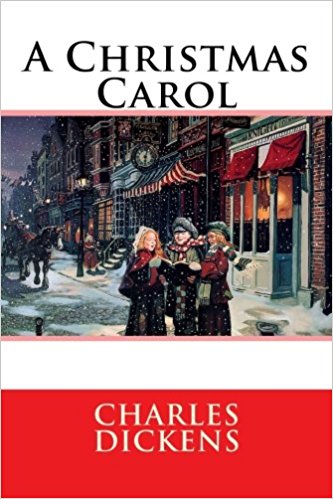
A Christmas Carol + 2 short stories

Short Stories:

“The Gift of the Magi” by O.Henry

“A Christmas Memory” by Truman Capote

Summary By J. Pratt

“I wear the chain I forged in life,” replied the Ghost (of Jacob Marley). “I made it, link by link, and yard by yard; I girded it on of my own free will, and of my own free will I wore it. Is its pattern strange to you?”  p. 542

Charles Dickens challenges us in his classic short story A Christmas Carol, to consider whether, in life, we forge a chain link-by-link that binds us, enslaves us, such that we can neither receive or give Love. And, Dickens suggests there are different types of “chains” whose patterns perhaps we can recognize if we had “eyes to see” which is of course the opportunity Marley’s Ghost and the three Spirits of Christmas provide for Scrooge.

Money plays a role in all three short stories. Were Della and James Dillingham Young (from “The Gift of the Magi”) unencumbered by “chains” of their own making? How about Scrooge’s nephew?

Do people truly have free will? If so, do they use their free will to make chains to willfully bind themselves, such that free will ceases to be free?

And what does all this really have to do with Christmas anyway?


NOTES:

The theme of laughter was also interesting and worthy of discussion.

“…while there is infection in disease and sorrow, there is nothing in the world so irresistibly contagious as laughter and good-humour.”

“…he (Scrooge) chuckled until he cried”

“…and knowing that such as these would be blind any way, he thought it quite as well that they should wrinkle up their eyes in grins, as have the malady in less attractive forms. His own heart laughed: and that was quite enough for him.”

1984

Summary By Chris Maiocca

It was primarily during the European Enlightenment, when scholars began to seriously and steadily look at the anatomy of human governments and why they were necessary.

The standard answer was that even though humans were born into a condition of perfect freedom, life in the state of nature tended to be, as Hobbes famously observed, “nasty, brutish and short.”

For this reason, men – either of their own accord or through the prior decision of their progenitors – were apt to leave the state of nature and join themselves to a political body – giving up some of their rights to life, property, and privacy in order that the government may secure the balance of those rights.

However, at the moment when these transactions took place – at the very moment when individuals entered into social contract with a body politic – an unalterable law commences in which the powers of the state tend to expand while the liberates of the governed tend to contract.

Means have been devised to check the expansion of the state’s reach into the lives of its citizens – and the general trajectory of human governments has happily gone from absolute monarchies to more constitutional forms of governance – but even still, the unseen law that always seeks to consolidate absolute power into a single locus is ever present and is always at work.

Now the particular thing to notice is that whenever this happens – whenever political power concentrates to a critical mass – it is at this moment that human governments tend to become more or less demonized.

Who can deny that it was something more devious than human agency which dreamt up the bombs of Hiroshima, the gas chambers of Auschwitz, and the crucifixion of God’s own son. Inconceivable atrocity has always been the fruit of unchecked power, as Orwell has so hauntingly taught us.

1984 is not a pleasant read but it is a prophetic one – reminding us that the world will most certainly end badly, that human government will always solicit our worship, and that now – even now – we are being watched.

Snow Goose

Summary by Robert Travis

The Snow Goose is a book about human nature. We are social animals and to be deprived of companionship is a horrible fate for almost all people. Our hero in this book is such a one; his deformed physical structure leads to isolation from others and Philip becomes a lonely man. Into his life comes a wounded “snow goose,” a gentle simple soul (soulmate) in the form of a young girl—Fritha. Then add a war and let nature take its course. Love in the end does indeed conquer all, both romantic love and love for your fellow man; also the need to have a cause for being to complete ones joy is a theme. Enjoy “The Snow Goose”

Leaf By Niggle

By Caleb Dyer

Purpose. A perennial quest which often times leaves the searcher wondering. In the last work of literature read by this group, “Hell is the absence of God,” the protagonist is forced to search for the purpose of the tragic loss of his wife, with his search ultimately ending in a bittersweet achievement that demonstrates that purpose can sometimes be a fruitless search. In “Leaf by Niggle,” the protagonist – a little man called Niggle – struggles to find reason for the endless interruptions to his pursuit of painting the most beautiful picture ever.

The story is divided into three parts, most probably influenced by Tolkien’s Roman Catholic faith. In the first part, Niggle is constantly forced to sacrifice his own desires to attend to the incessant demands of his lame neighbor Parish. Parish constantly asks for help, and although Niggle may not be the most willing helper, the laws of the land and his own kindly nature compel him to help Parish whenever the latter requires assistance. The true irony in this first section is that what ultimately leads to Niggle’s death (the inevitable journey) is a request that causes him to take a bike ride in a storm. This bike ride leaves Niggle sick with a fever that will lead to his death; yet even as he is sentenced to death by nature, he is inspired and realizes exactly what and how he needs to paint upon his canvas in order to achieve his vision. Throughout this first stage of Niggle’s story, the reader is presented with the juxtaposition of the reality that what a person desires or feels purposed to do is not always what they are able or required to do. If this then is the case, the reader is left with the inevitable question: does what I really do matter?

Moving on, we come to the purgatory of Niggle. It is at this stage that Niggle completely forgets his life’s dream, to complete his painting. Instead, he is forced to perform mundane and trivial tasks. When he is on the verge of becoming complacent with his daily routine, it is forced to change. One day, he hears an “inquiry board” discussing Niggle’s own life. Much of the discussion focuses on the fact that Niggle did not do much that is noteworthy in his life, and also did not help enough people. Yet it is also pointed by one member of this board that Niggle died as a result of helping his neighbor, even when that help was pointless and unnecessary. As the reader hears this discussion, the question of purpose continues to rear its head: if Niggle’s loving actions towards his neighbors and towards others have no purpose, even when it ultimately costs him his life, then what is the point of doing any of it?

After Niggle is freed from purgatory, he is heralded into a beautiful country, with a bike that he can use to explore it. While riding his bike, he is startled and amazed to find that his tree – his one painting that he thought unfinished at the start of his journey – was the pinnacle and focal point of a beautiful forest. Indeed, everything surrounding Niggle seems to be something he painted or dreamed of painting. Upon realizing that he needs help, he wishes that his neighbor Parish was with him. Immediately upon wishing this, he finds Parish not too far from him. In this beautiful land, Niggle and Parish become fast friends, and Parish realizes his mistake in dismissing the former and his painting. At the end of the story, the audience learns that many people have benefitted from Niggle’s painting. The land that was inspired by it has helped many to adjust and

prepare for the last stage of their journey, and a painting which seemed pointless and purposeless turns out to be a great blessing to many.

While determining the purpose of one’s life or actions may seem to be a fruitless and hollow endeavor, purpose is found in the end. It is not found in the midst of an action or journey or life, but at the end of it. For Niggle, the purpose of all he had wrought and dreamt was a beautiful country that beckoned those on their final journey to a better and more beautiful place. And for the reader, it is a reminder that the true meaning and purpose of life is found within a community of other people, as opposed to by one’s self.

The Stories of Your Life

By Dennis Philip

sci·ence fic·tion
ˈsīəns ˈˌfikSHən/
noun: science fiction; noun: SF; modifier noun: science-fiction; noun: Sci Fi; plural noun: Sci Fis

fiction based on imagined future scientific or technological advances and major social or environmental changes, frequently portraying space or time travel and life on other planets.

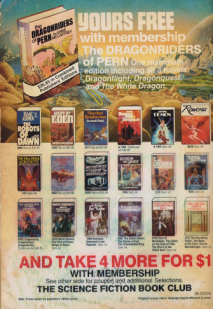
I love reading science fiction and fantasy and in fact as a youth, its what drew me into reading.  It may have been the fact that I was amazed that I could get four books mailed to me for only $1 but in any case I joined a book club and suddenly found myself with a commitment to buy another five or six at full price and to read these large books I had ordered.   I still remember how anxious I was to dive into the next SciFi or Fantasy novel reading Asimov, Burroughs and many other authors along the way.

Four4OneDollar

Countless Sci Fi and Fantasy novels later I shifted into reading action novels by Ludlum and other authors and had lost my interest in Sci Fi until a recent trip where I needed to find a new book to read.   I had seen advertisements for the movie Arrival and since I had not yet seen the movie thought this might be a good book to dive into.  After reading three chapters of the book and not seeing how they linked together I realized this book:  Arrival(Originally Published as Stores of Your Life and Others) was actually a collection of short stories written by Ted Chiang one of which on was adapted for the movie Arrival.  I found each of the stories to be intriguing and the book renewed my excitement for reading Sci Fi.   I don’t know if I would go as far as Cory Doctorrow from BoingBoing who said “Ted is a national treasure….” But I did have a good time with this collection of jewels.

“Hell is the absence of God” – The author is an atheist and this is a viewpoint on divine intervention that he puts forward.  An article with Ted Chiang in the New Yorker Magazine states – “readers have argued about the meaning of Chiang’s vision of a world without faith, in which the certain and proven existence of God is troubling, rather than reassuring.”  This story should be the subject of some interesting discussion.  It involves several   characters whose lives are changed by events associated with visitations of angels to the earth that commonly occur and typically provide miracle cures to some and at the same time inflict casualties on others.  In my view Ted falls short in his understanding of God with the last few pages of the story “God is not just, God is not kind, God is not merciful.   While it would be great to get help from God to be able to love him the way he deserves, God wants our love for Him to be a choice and something that can continue to grow.

“Understand” – This is a story about an individual who recovers from brain trauma through the use of hormone therapy.  I am a Robert Ludlum fan and this is somewhat similar to the Jason Bourne character but all the action is mental.   A story about the costs and uses of knowledge.

“The Story of your life” – This one is about aliens landing on earth and how we approach communication with them as well as the result of this interaction.  As stated in the New Yorker, “It’s about accepting the arrival of the inevitable”.  Once again the book is better than the movie.

“Tower of Babylon” – “they gave thanks that they were permitted to see so much, and begged forgiveness for their desire to see more.”  Winner of the Nebula award in 1990 is a short story about a person involved in the final portion of building the tower of babel and what happens when they reach the top.

“Division by Zero” – About a mathematician who disproves mathematics and its effect on her.

“Seventy Two letters” –  About automation, production, population control, class warfare, a cabbalist an assassin and an artist (of “True Names”).

“The Evolution of Human Science” – 3 pages – I think it was over my head. I needed a DNT to read it.

“Liking what you see: A documentary” –  This one was a story I did not finish.    Society has a way to change the circuitry of the brain to change ones visual perception.  Personal appearance is no longer an issue.  Some people decide to remove this device or block called Calliagnosia.  The story just did not hold my interest.

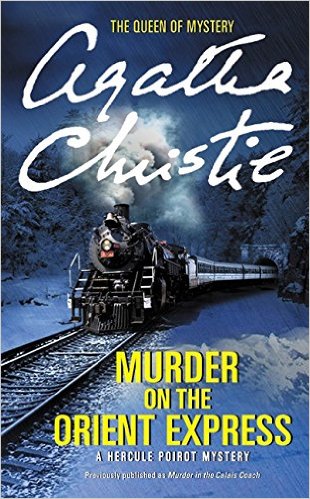
Murder on the Orient Express by Agatha Christie

By Matt Davis

Murder on the Orient Express, as compared to our previous books, was a fun and easy book to read. In my opinion, it lacks any life-altering applications, but was a fun escape from the everyday. Inspector Poirot was an intriguing character who is a student of individuals. He seems to naturally study and enjoy making inferences about people and their personalities. It was neat to see how he saw the events and people on the Orient Express as characters in a play, and caste them according to their roles—the gardener, the nanny, the cook, etc. Admittedly, I had trouble following the who’s who and in what compartment, but it more or less all came together in the end. The end was almost a “choose your own adventure” finale. “Justice” was served, and everyone walked away clean, or were they?

OrientExpressTrainLayout

Hercule Poirot:
Hercule Poirot is the detective in this novel. Upon receiving a telegram that tells him “Development you predicted in Kassner Case has come unexpectedly please return immediately.” So, M. Poirot hurries to catch the Orient Express on it’s way to England. It is on this train that the murder occurs, and Hercule Poirot must solve the mystery. Hercule Poirot is a short, small man with a large, curled mustache. He has green eyes like a cat’s which he uses to find clues! He is Belgian.

Lieutenant Dubosc:
Lieutenant Dubosc is the French man that  M. Poirot is talking to in the beginning of the book. He takes his job very seriously and is very good at it. He has apparently saved M. Poirot’s life before. He is not one of the passengers on the Orient Express.

Mary Hermione Debenham:
Mary Debenham is an English governess who is aboard the Orient Express with M. Poirot. She is twenty-eight years old and has grey eyes. She is very efficient and hardworking. She, Colonel Arbuthnot, and M. Poirot were all on another train called the Taurus Express before boarding the Orient Express.

Colonel Arbuthnot:
Colonel Arbuthnot is on both the Taurus and Orient Express with M. Poirot and Mary Debenham. He is a colonel for India but is English. He is honourable, slightly stupid, and upright.

M. Bouc:
M. Bouc is a friend of M. Poirot and is aboard the Orient Express with him. He also owns the Wagon Lit train service.

Hector MacQueen:
Hector is a thirty year old American who travels with Mr. Ratchett. He is Mr. Rachett’s secretary.

Samuel Edward Ratchett:
Mr. Ratchett is the man who is murdered. He is stabbed a dozen times. When M. Poirot first saw Mr. Ratchett, he described him as a savage animal. M. Poirot thought that Mr. Ratchett looked like a kind man, but he had small, cruel eyes.

M. Harris:
M. Harris is an Englishman who was supposed to board the Orient Express. However, the train was full and Hercule Poirot needed a room, so, as M. Harris was late, M. Poirot took his room. Later, M. Poirot finds out that this was a fake person. See the Suspects and/or Summary page for more details.

Princess Natalia Dragomiroff:
Princess Dragomiroff is very ugly. M. Poirot says that she looks like a yellow toad. She has a small, toad-like face. She also has eyes like jewels, dark and imperious. Her hands are yellow and claw-like with rings on her fingers. The Princess has a deep voice that is very distinct, with a slight grating quality. She is Russian and is extremely rich. Her Christian name is Natalia. She is fragile, so is not suspected to have stabbed Ratchett. M. Poirot says “I think, Madame, that your strength is in your will, not in your arm.”

Doctor Constantine:
Doctor Constantine is a small dark man who investigates and examines the body of Mr. Ratchett with Hercule Poirot. He also assists M. Bouc and M. Poirot as they try to find out the murderer(s) is/are.

Mrs. Caroline Martha Hubbard:
Mrs. Hubbard is a very talkative elderly woman. She is always talking about her daughter. She is stout and pleasant faced and speaks in a low monotone voice. She tells Hercule Poirot that she is scared of Mr. Ratchett and that she wouldn’t be surprised if he turned out to be a murderer.

Greta Ohlsson:
Great Ohlsson wears glasses, is tall, is 49 years old, and has fading yellow hair. When she is first introduced in the story, she is wearing a tweed skirt and a plaid blouse. She is described as “sheep faced” because of her long, mild, amiable face. She is Swedish. She also does not speak very good English, but she speaks and understands French. Greta works as a matron in a missionary school near Stamboul. She also was a trained nurse. Mary Debenham says “She’s like a sheep, you know. She gets anxious and bleats.”

Pierre Michel:
Pierre Michel is the Wagon Lit conductor. Monsieur Bouc knows an trusts him. The conductor has worked for the company for over fifteen years and is very honest. He is a Frenchman and lives near Calais. He is respectable, but not remarkable for brains.

Edward Masterman:
Edward Henry Masterman is Mr. Ratchett’s valet. He always travels second class and is 39 years old. His home address is 21 Friar Street, Clerkenwall. He is an Englishman with a pale face.

Antonio Foscarelli:
Antonio Foscarelli is an American citizen, but is Italian. Antonio moves with a swift, cat-like tread. He has a typical Italian face; sunny looking and swarthy. He is a car sales person. He suspected that Ratchett was and, however, he didn’t know that Ratchett was actually Cassetti.

Fräulein Hildegarde Schmidt:
Hildegarde Schmidt is Princess Dragomiroff’s maid. She has been the Princess’s maid for 15 years and is very trustworthy. She is German. Her people come from an estate belonging to Dragomiroff’s late husband.

Countess Helena/”Elena” Andrenyi:
Countess Andrenyi is a beautiful lady who is 20 years old. The Countess has dark, almond shaped eyes and scarlet lips. She has dark, long eyelashes and looks very exotic. She speaks a little English and has a charming accent. She is married to Count Rudolph Andrenyi. The two have only been married a year. Whenever riding on a train, the Countess takes a sleeping draught. She pretends that her name is Elena, when it is really Helena.

Count Rudolph Andrenyi:
Fine looking man who is at least six feet tall. He has broad shoulders and slender hips. He was in Washington for a year. He is married to Countess Helena Andrenyi. The two have only been married a year.

Cyrus Bethman Hardman:
Mr. Hardman is a big, flamboyant American. When he is interviewed by M. Poirot and his friends, the man was wearing a loud check suit, a pink shirt, and a flashy tiepin. He has a big, fleshy, coarse-featured face and a good humored expression. Mr. Hardman is forty one and sells typewriting ribbons. However, this is not Mr. Hardman’s real identity. He tells Hercule, Dr. Constantine, and M. Bouc that he is a detective for New York’s McNeil’s Detective Agency. He also says that he was employed by Mr. Ratchett to protect him from the people/person who wanted to kill him. Obviously, Mr. Hardman didn’t do his job very well…
 

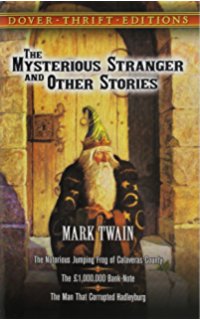
The Mysterious Stranger & Other Stories by Mark Twain

by Gregory Thornquest

“Every man is a suffering-machine and a happiness-machine combined. The two functions work together harmoniously, with a fine and delicate precision, on the give-and-take principle. For every happiness turned out in the one department the other stand ready to modify it with a sorrow or a pain-maybe a dozen. In most cases the man’s life is about equally divided between happiness and unhappiness. When this is not the case the unhappiness predominates-always; never the other. Sometimes a man’s make and disposition are such that his misery-machine is able to do nearly all the business. Such a man goes through life almost ignorant of what happiness is. Everything he touches, everything he does, brings a misfortune upon him. You have seen such people? To that kind of person life is not an advantage, is it? It is only a disaster. Sometimes for an hour’s happiness a man’s machinery makes him pay years of misery.”
Samuel Clemens, otherwise known as Mark Twain, was being driven by his “suffering-machine” as his heart poured out these words and as he created The Mysterious Stranger. There is a sadness to this novella, as if it was a therapy for him, a release of his darkest pains and wounds from life. He made this story personal.
What makes a man refute and deny God? At age 11 Clemens’ father dies, around age 22 his riverboat pilots career is ended due to the Civil War, close to 30 years old he has failed as a silver prospector in Nevada, around age 38 his two year old son dies of diphtheria, in his 40s witnessed the failure of the Reconstruction Period and consistent inhumanity to Blacks, in his 50s poor investments forced him into bankruptcy and the loss of his publishing company, his daughter dies at age 24, living abroad he witnessed many wars such as in South Africa, China, and the Philippines, in 1904 his wife became ill and died, in 1909 his youngest daughter died from an epileptic seizure. Clemons, I can only presume being ready for the end, drifted into his world with no God four months later on April 21, 1910 at the age of 74.

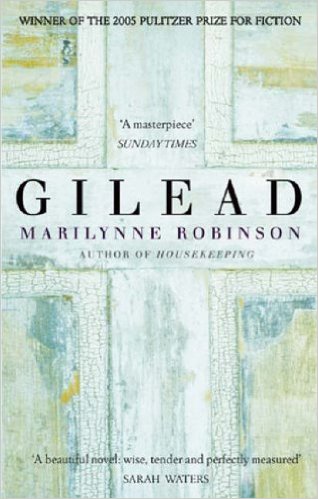
Gilead

By Rev. Cam Lemons

For me acutely and to maybe a lesser degree humanity generally, we live our lives in a painful tension between the wanderlust of Chris McCandless, and the settled faithfulness of John Ames.  Chris McCandless embodied our youthful desire to broaden our experiences, to test our bodies, and to discover the breadth of the world’s beauty.  John Ames images an aging, righteous soul that has found contentment in the dusty roads of a no-name town, and deep wonder in the gift of a wife and child.  He is the complex and refined result of Eugene Peterson’s ‘long obedience in the same direction.’ He isn’t well traveled. He isn’t well known outside his tiny town. And he knows the damp presence of melancholy. But he has been faithful in the small plot of mid-west property that he inherited. And as years of unglamorous faithfulness accumulated into decades, rather than receiving stunning plot twists, and sensational rewards, he was given some hard, some happy stories, and a satisfaction with the humble life that he lived and legacy that he left.

This story is completely out of vogue with our times, and with marketable literature. There is nothing fast and furious to sell here. There are no melodramatic, scandalous moments to capture our immature attention. In Gilead, no one quiets their job, burns their money, or makes the evening news. The Christian faith that is personified isn’t brash and over confident. In fact, one of the major actors in Gilead is the illusive character Time, who over the course of many years reveals people’s core identity. And in doing so works to redefine our idea of what is noteworthy, what is important, what is publishable. Maybe putting on a tie, kissing your wife and heading to work, is more glorious than our world would like us to believe. And maybe only time can recognize it.

I found myself toward the end of the book concerned about the connection between Jack and Lila. In fact, I was more concerned about it than Rev. Ames seemed to be. But it alerted me to the fact that I cared about these characters in this book. Even though he didn’t immediately wrap me around his finger, I had grown to respect John Ames deeply, and I was concerned what a 21st century writer might do with his legacy in the closing pages of her book. But thankfully, my instinct for the sensational was wrong. Marilynne Robinson once again resisted the mannerisms of her time. And she told her story with integrity, of a righteous man that was able to find a quiet death. The book’s primary tension, between a man and his legacy, had found an enduring resolution. I hope that my story reads like this one day. In a time when everyone wants their moment of fame, maybe the person we need to spent time with is that old soul that teaches us that fame is something that the great souls of past times never needed, and maybe they are all the greater for it.

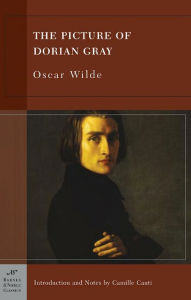
The Picture of Dorian Gray

Summary by J. Pratt

What if there was a tangible, visible expression somewhere in the world which depicted the actual, very nature of our heart, our being…our soul?  This question is a way of pondering how we might complete the statement – “If you really knew me,               .”

In this powerful, classic story by Oscar Wilde, we were faced with a character who makes the “Faustian bargain” to essentially exchange his soul with the Devil, to achieve that which he believes will bring him happiness, meaning, purpose, power and influence. In the end, he receives a horrifying “visible expression” of what the exchange actually cost him. This provocative piece of literature reminds us that the worst words a person could ever hear in his life, would be from his Creator who says “have thine own way.”