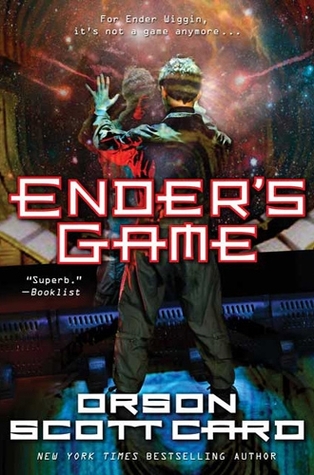
Ender’s Game

Summary by Tony Groesbeck

“His isolation can’t be broken. He can never come to believe that anybody will ever help him out, ever. If he thinks there’s an easy way out, he’s wrecked.”
                                                                                            Ender’s Game, Ch. 5

Sometimes as readers, we find ourselves confronted with some big questions. Do the ends ever justify the means? Does the good of the many outweigh the good of the few? If we lose our humanity, is humanity still worth saving?! Perhaps these questions seem melodramatic (especially the last one), but if ever melodrama was turned into a surgeon’s knife, it is in one of the most acclaimed science fiction novels of the 20th century, Ender’s Game . In this HUGO Award and NEBULA Award winning novel, author Orson Scott Card presents a thought experiment to help us explore some of the convictions we hold most closely.

In the book, young genius Ender Wiggin is bred and trained to literary save humanity, but for readers, humanity itself is put under a microscope for our inspection. Through the actions of his world’s political and military leaders, Card shows that some decidedly inhuman actions may be necessary in order to preserve humanity from a looming alien threat. Ender, who is a very young child, is repeatedly and intentionally exposed to bullying of the most extreme measure, tested by instructors to the point of physical and mental exhaustion, and left to fend for himself in situations that sometimes require lethal force. While under normal circumstances, any of

these actions would be considered abuse, the author masterfully creates an environment which allows readers to seriously ponder whether these methods would be acceptable in order to save all of humanity. Card could only present this question in a realistically debatable forum if he set his story in an unrealistic environment where these methods were necessary to forge the soul of a child who would be humanity’s only hope to avert an extinction-level event.

Science fiction, at its best, puts the reader into a world where we can wrestle with ideas that may be hard to get a handle on in our own world. Ultimately, yes, Ender’s program of suffering was successful in preserving a human race that was cruel enough (dare I say inhuman enough) to allow him to suffer enough to save itself. How this translates to our own lives is a great place to start a conversation, but let me pose this: if Ender and all he went through in preparation to save humanity destroyed something foundationally important to what makes us human, was it really humanity he was saving, or something else? It seems that Ender himself was struggling to hold on to what he considered vital to being human. For instance, his love for his sister and friends, and his deepest fear that he would become a true killer like his brother show us that Ender is desperately grasping at what it means to be human; perhaps in this, Ender’s plight gives us an opportunity to examine ourselves and consider what convictions we would be willing to abandon in the direst of circumstances.

Of course, this is not the only theme that Card presents in Ender’s Game ; he also presents wonderful examples of leadership, sacrifice, innocence, and cold logic, but those will have to be discussed over a pint. Drink up, my fellow launchies, we’re going to battle school!
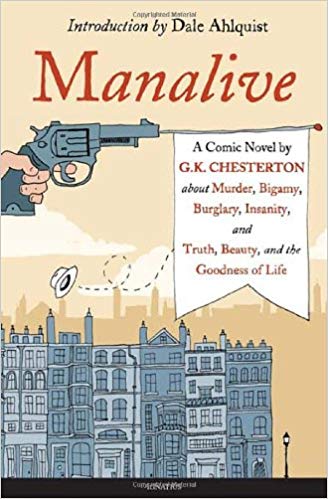

Manalive

Summary by Matt Davis

This book, by GK Chesterton, is a book that challenges us all to not be “men who had long been unconsciously imprisoned in the common place.” Or, as Michael Moon says, “Madness does not come by breaking out, but by giving in; by settling down in some dirty, little, self-repeating circle of ideas; by being tamed.” Instead, we need to keep our sense of boyish awe and wonder at creation’s beauty, and life’s unexpectedness. We should feel “that [we have] come into eternity, and that eternity was very like topsy-turvydom.” We need to be enraptured by the whimsical!

True happiness lies in the pursuit of righteousness—keeping the commandments; “capturing the trick of coveting [our] own goods” and creatively loving our wives. “Leave off buying and selling, and start looking! Open your eyes, and you’ll wake up in the New Jerusalem.”

My hope and prayer for all of us is that people will say we are crazy because we really are happy, we really are hilarious, and we really are a manalive.

Hamlet

Summary by Seth Loh

In reading Hamlet, by William Shakespeare, it is important to remember that the Bard of England never intended for us to read the story as a book, but to see it unfold before us as a staged performance. Even though Shakespeare is a master of words and his use of language is poetically rich with meaning, perhaps it is only through the performance of a great actor that the words come to life and we can truly appreciate the conflicted heart that beats within the chest of Hamlet, Prince of Denmark.

As the plot goes, the young prince returns home from university to mourn the loss of his father, when he soon discovers that his mother has married his uncle, Claudius. This is a double-edged sword as it mocks the grave of his dead father and deprives Hamlet of the throne that is rightfully his. To further complicate matters, the ghost of the late king has been roaming the castle grounds and reveals to Hamlet, that Claudius, in fact, murdered him. Hamlet is then commissioned to “remember” his slain father by taking revenge on Claudius and thereby cleansing the throne of Denmark from its treachery. This newfound sense of purpose proves to be much more difficult to accomplish than what should follow as a simple, kill the bad guy, and restore the kingdom type of story. Instead, viewers get to see the drama drag on and are rewarded with glimpses into the mind of a hero grappling with questions of existence, revenge, and virtue.

Hamlet’s soliloquies’ ultimately can be seen as a mirror into our own souls’ longing for understanding during difficult times. As a result, it would be interesting to reflect on what it would be like to have been in Hamlet’s shoes. How would you have acted knowing that your best friends were spying on you for your enemy? How would you have felt about your mother’s hasty marriage? What course of action would you have taken regarding revenge? The answers are not simple, nor does the play provide any clear-cut advice. So, before you answer, “I would have killed that incestuous, murd’rous, damned Dane!” consider Hamlet’s own words at the start of the messiness which remind us that, “there are more things in heaven and earth…than are dreamt of in your philosophy.”

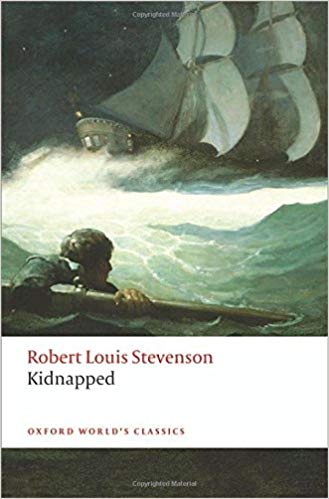
Kidnapped

Summary By Tony Groesbeck

“‘Come to my arms!’ he cried, and embraced and kissed me hard upon both cheeks. ‘David,’ said he, ‘I love you like a brother. And oh, man,’ he cried in a kind of ecstasy,
‘am I no abonny fighter?’”

The virtues of love and fortitude stand side by side at the heart of Robert Louis Stevenson’s coming-of-age historical adventure novel, Kidnapped. Stevenson is, of course, the well-known and beloved author of the archetype of pirate adventure, Treasure Island, and that treatise-on-the-dual-nature-of fallen-man disguised as a gothic horror story titled, The Strange Case of Dr. Jekyll and Mr. Hyde. These two works are most certainly Stevenson’s most read and imitated works, but perhaps greater loved by those who love Stevenson is Kidnapped. Tellingly, the full subtitle of this book is … (take a breath):

Kidnapped,
Being the Memoirs of David Balfour in the Year 1751

How He Was Kidnapped and Cast Away;
His Sufferings in a Desert Isle;
His Journey in the Wild Highlands;
His Acquaintance with Alan Breck Stewart
and Other Notorious Highland Jacobites;
With All That He Suffered at the Hands of His Uncle, Ebezezer Balfour of Shaws, Falsely so Called.

While the subtitle should probably be affixed with a “spoiler alert” label, the fact that so much of the storyline is awarded to the reader before we start the first chapter hints that perhaps there is more to this book than just the plot. Indeed, the treasure here is not found in the simple storyline, but it must be dug out like Flint’s gold in Treasure Island.

In Kidnapped, we accompany young David Balfour on his 30-chapter romp across the Highlands of 18th Century Scotland as he earns a trial-by-fire kind of education concerning what it means to be a man of quality. As his story begins, David is a proud but naive young man of just 16 years who has been raised by a kindly country minister and wife. By the end of the tale, David has been transformed by his experiences; his ideals have been weighed on the twin scales of danger and experience, have often been found wanting, and have been reformed into a combination of virtues that we are led to believe will establish Mr. Balfour as an esteemed gentleman in his new life.


Because of this growth in David, we could label the story as a classic bildungsroman (coming-of-age story), and it certainly is that, but it is also a clear example of a “Hero’s Journey” plot line. This designation, which can be applied to seemingly unrelated stories such as Star Wars, The Matrix, The Adventures of Huckleberry Finn, The Chronicles of Narnia, and even Beowulf, indicates (among other things) that (1)the hero of the story has a departure from his status quo; (2) he receives assistance from a mentor of some kind; (3) he engages in trials that are difficult and almost certainly dangerous; (4) he is eventually able to return home as a changed man. It is impossible to read Kidnapped without seeing how David Balfour’s experience closely mirrors this well-known framework. In his coming-of-age, David’s mentor is Alan. David sees the values and virtues that Alan loves and espouses; “Davie” weighs them for himself as he decides which of these values and virtues he will adopt as he passes the misty threshold into manliness.

Possibly to avoid letting Kidnapped seem overly predictable or familiar due to its adherence to well-known literary patterns, Stevenson squeezes a great deal of pathos from the relationship between David and Alan Breck, “The man with the belt of gold.” David’s initial choice to join Alan in his defense of the roundhouse in chapter 10 was less about David’s love (or even knowledge) of Alan Breck as a man, and more about his (David’s) love of justice, fortitude, and charity. Indeed, Alan Breck is not initially all that likable; he is a vain boaster, given to selfishness and violence. Clearly, David’s decision to side with Alan says more about David’s character than it does about Alan’s. When he heard the duplicitous Captain Hoeseason plotting, David, as a young man of principle, was disgusted by the dishonesty, injustice, and greed-driven treachery being shown by Hoeseason and his men.

In this pivotal moment in the book, the Siege of the Round-house, we see the foundation of a friendship that will be built on something much more formidable than personal affinity for one another. In spite of intense cultural and political differences that would often lead to bloodletting in the era, a love of justice drives young David to befriend Alan Breck, and a love of fortitude drives Alan to befriend David. Alan and David, who should by all rights be enemies, become boon companions, driven together by danger and their shared love of both righteous causes and principled actions.

Eventually, we come to the understanding that their friendship is an example of true Christian love, the kind that seeks the good of the beloved, that drives them both to sacrifice much for the good of the other, and finally find themselves safely through many trials and dangers. Perhaps it is Stevenson’s depiction of virtue that allows us to connect so easily to men despite the fact that they find themselves in circumstances unlike anything we have ever experienced.

All Quiet On The Western Front

By Gregory Thornquest

There are no soldiers that come out of war unwounded. Physical, mental, and emotional wounds spread throughout a war-torn society in a similar way shrapnel from artillery on the front line blankets the land surrounding it.

Erich Maria Remarque in his novel All Quiet on the Western Front walks the reader through the devolution of a soldier’s transformation from man to beast and the creation and demise of the “Iron Youth”.

He writes, “The thunder of the guns swells to a single heavy roar and then breaks up again into separate explosions. The dry bursts of the machine-guns rattle. Above us the air teems with invisible swift movement, with howls, piping, and hisses. They are smaller shells;-and amongst them, booming through the night like an organ, go the great coal-boxes and the heavies.” His writing is beautifully horrific, filled with creative analogies and personification, all the while describing the terrors of man and war. This piece of art can only derive from a first hand experience of such situations of suffering and loss. As Remarque enters WW I himself at age 18 he will be transformed into what the novel refers to as the “Iron Youth”, until he is wounded multiple times and spends the rest of 1918 healing in an army hospital in Germany. It is a triumphant feat that he survived, but I can’t help but ponder how many great authors, teachers, and doctors were amongst the estimated 9 million lost during this “Great War”.

I suffer from a heart aching with gratitude for soldiers and the families who have had to make the greatest sacrifice. I believe this emotional draw to the main character Paul was intentional. We are taken into the most intimate and personal situations one can be brought as we first travel to the front line to meet his comrades. Then we are escorted to his home to visit mother and are there made aware of his conscious dualism battling to detach himself from the civilized world or to be humanly vulnerable. Eventually we are thrust back to the front line to experience the true face of war and participate in loss alongside Paul. 

At the end I am overwhelmed with sorrow for such a loss of life and frustrated at the ignorance of man to not learn from the mistakes history has taught us. The author has forced me to care and for that I am grateful.

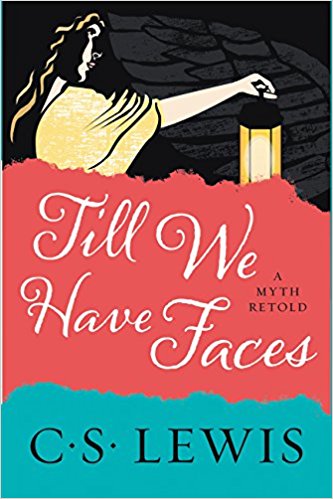
Till We Have Faces

Summary by Andrew Hess

“The sweetest thing in all my life has been the longing — to reach the Mountain, to find the place where all the beauty came from — my country, the place where I ought to have been born. Do you think it all meant nothing, all the longing? The longing for home? For indeed it now feels not like going, but like going back. All my life the god of the Mountain has been wooing me. Oh, look up once at least before the end and wish me joy. I am going to my lover. Do you not see now—?” (Till We Have Faces, bk. 1, 7, p. 76)

C.S. Lewis’ Till We Have Faces is the story of Orual, queen of the fictional kingdom of Glome. The first part of the book is Orual’s accusation against the gods told through the story of her early life as a princess and her eventual reign as Glome’s wise and just queen. She accuses the gods of being cruel in meddling in the affairs of humankind.

At the end of her life, however, Orual has a change of heart. She desires to rewrite her book but settles – due to weakness and illness in old age – to adding a new, more humble ending. In the end, Orual admits she was wrong to accuse the gods and that they were always lovingly present. She comes to see that her accusations against the gods resulted from her own weakness, bitterness, and failure.

This novel has a mysterious depth to it. Lewis takes inspiration from the classical myth of Cupid and Psyche. In the story, the local goddess Ungit who, like Aphrodite in the myth, is jealous of Psyche’s beauty and so withholds her from wouldbe lovers. This taking away of Psyche makes up a large part of the queen’s complaint.

Orual also wrestles with the pain of her own trials; she shares the pain of her own lesser beauty and the physical and emotional abuse from her father during her childhood.  This wound grows deeper as she is compared first to her sister Redival and then to the even more beautiful Psyche. Lewis uses this veiled queen to convey something profound about the nature of true beauty.

One of the most poignant mysteries weaved into this story is the one anchored in the title. What are we to learn from the symbolic use of faces and the lack thereof? There is much to discuss here, but perhaps most of all, Lewis is exploring the idea that mortal flesh cannot and will not understand all the mysterious purposes of God in this life. Especially in times of trial and suffering, Till We Have Faces offers comfort and a reminder that God himself is the best answer to our deepest soul questions. Even our strongest accusations will one day fall away when we are able to see the God of love and mercy face to face.

In our present ignorance, we all at times have accusations we’d like to bring before our Creator: Couldn’t this tragedy have been prevented? Why was I given this gift and not another? Wisdom is found in discovering that our best posture is in humbly letting our questions and accusations feed a deeper longing and desire to one day be with God himself, who promises to answer our questions and wipe away our tears. May we learn as Orual did that God himself has always been the answer to our heart’s deepest longings.

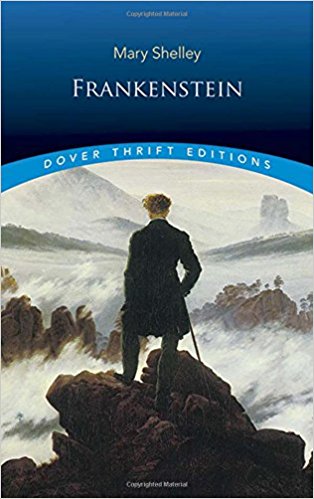
Frankenstein

Summary by Matt Davis

“…how gladly I would sacrifice my fortune, my existence, my every hope, to the furtherance of my enterprise. One man’s life or death were but a small price to pay for the acquirement of the knowledge which I sought for the dominion I should acquire and transmit over the elemental foes of our race.” This confession of R. Walton to Victor Frankenstein opened the floodgates for Victor to finally share his burden in the hope that Walton will not make the same mistake he has.

The story of Frankenstein by Mary Shelly is a moving and gut wrenching tale about a young Victor Frankenstein who, in pursuing his passion of science, creates a life. However, in creating a life without weighing the implications of his actions, he ultimately takes life from those he loves dear.

Mary Shelly masterfully writes this novel using language and descriptions that draw us into the story to experience the extreme happiness and deep sadness of the characters. We take in the sublime beauty of the rugged mountains, lakes, and flowing waters. Our guts are wrenched as we wrestle with the same sense of justice and duty, virtues and vice, compassion and loneliness that Victor and his Monster wrestle with.

The description R. Walton gives regarding Victor is analogous of the journey we take as we navigate this tale: “Even broken in spirit as he is, no one can feel more deeply than he does the beauties of nature. The starry sky, the sea, and every site afforded by these wonderful regions seen still to elevate his soul from earth. Such a man has a double existence. He may suffer misery and be overwhelmed by disappointments yet when he as retired into himself he will be like a celestial spirit that has a halo around him within whose circle no grief or folly ventures.”

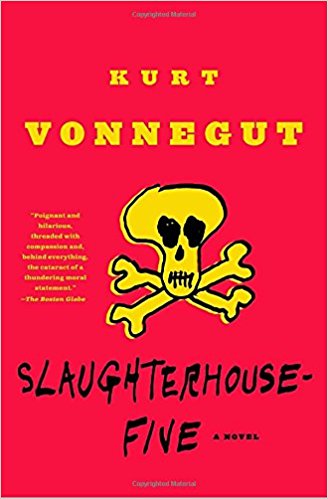
Slaughterhouse Five

Summary by Seth Loh

There is always something captivating about sitting around and listening to Grandpa’s “crazy stories” (or Rob Travis’ for that matter). Slaughterhouse-Five by Kurt Vonnegut is no exception as it embodies that same gruff tone one might hear from their elders, albeit with a bit more science fiction.  Vonnegut describes himself and his book as:

“A fourth-generation German-American now living in easy circumstances on Cape Cod [and smoking too much], who, as an American infantry scout Hors de Combat, as a Prisoner of War, witnessed the fire-bombing of Dresden, Germany, ‘The Florence of the Elbe,’ a long time ago, and survived to tell the tale. This is a novel somewhat in the telegraphic schizophrenic manner of tales of the Planet Tralfamadore, where the flying saucers come from.
Peace.”

As it were, the book takes readers through a sporadic “unstuck in time” journey of the life of Billy-Pilgrim. It jumps around in a non-linear manner from Pilgrim’s WWII experiences, to his alien abduction, to his marriage with his rich ugly wife Valencia, and everything in-between.

The very structure of the book, and the unique nature of the aliens reveal fascinating themes concerning the nonsense of war, human nature, and the meaning of existence. After all, asking, “Why terrible things happen?” is a normal human question and yet to the aliens – it’s pointless. According to the Tralfamadorians, everything that has happened, is happening, and will happen is simply structured that way. Or as they put it, “we are all bugs trapped in amber. There is no why.”

It’s interesting to consider our own lives in light of this same structure. What if we became “unstuck in time?” What would the “amber” moments of our lives look like and would we still care whether innocent people get massacred, animals get eaten, or the champagne goes flat? So it goes.

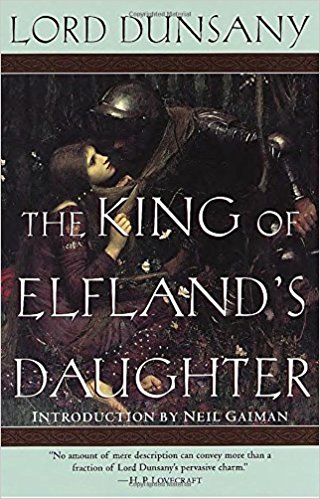
The King of Elfland’s Daughter

Summary by Gregory Thornquest

Before Lewis opened the wardrobe to Narnia and Tolkien sent Bilbo to lead us to Middle Earth, Lord Dunsany created Alveric to take us to Elfland in The King of Elfland’s Daughter. It is a land beyond the edge of the fields we know, passed the twilight, filled with deep colors and an elfish glow. The pale-blue peaks of the Elfin Mountains pull us eastward to a world of poetic literature and supernatural fantasy.

The theme of an adventurous desire for more permeates throughout the novel. We see this in a parliament of 12 men complaining they have “no new thing” and asking to be ruled by a magic lord, and in a man restlessly searching for his wife who is lost in a timeless place. This desire for difference continues with a group of trolls leaving the safety of home to explore their dangerous curiosities, and the longing of a mother to be reunited with her son in a foreign land her heart has grown to love.

While journeying through the chapters of this book one must question the intentions of their own internal desires. Are our goals, desires, and longings for the purity of love or to be “known among men”.  And what if we were to achieve our desires from youth? Would we celebrate our accomplishment or would the wisdom of age convince us we were wrong all along?