The Great Divorce

by C.S. Lewis

Discussion Prompt #1 by Matt Roy

Coming soon!

Discussion Prompt #2 by Jeff Pratt

If you were forced to identify the single, greatest (non-biblical) story ever written – what criteria would you employ to make your decision?  Perhaps you would consider the powerful and imaginative use of literary device. Or maybe you would have concern for it’s multi-ethnic and multi-generational applicability.  Maybe you would be concerned about accessibility – is it understandable, easy to follow…perspicuous and wisely parsimonious?  Or, maybe, you might ask – is the story widely quotable, such that it remains by way of conviction unavoidably on one’s lips and within one’s heart?  Perhaps most importantly – you would want to know the degree to which the book provokes utterly profound reflection about the condition of our own souls as framed in how we honestly answer all of life’s most challenging questions. Or put it another way – Does the story move us and help us to be both willing to honestly ask and honestly seek answers to questions, such as: 

  • Is there a God and is He Good? How can I know?
  • What is the nature of what is “real?” What’s reality, and how can I know?
  • Am I created, thus to some degree rightly “belong” to my Creator, or, am I just a random result of cosmic mysteries, and thus must console myself that I’m ultimately on my own in the universe, with a limited number of breaths left in my lungs?
  • What is my identity, i.e. the true meaning of my life, and how can I know it?
  • Is my soul eternal? Am I more than the sum total of my physical chemistry?
  • Is there a heaven? Is there a hell?
  • Do I suffer from inherent “brokenness” that I am able to know and recognize as being out of my control to “fix”, and thus recognize my desperate need for salvation, redemption, etc?
  • Is my brokenness ultimately the result of disordered loves, i.e. loves which are actually gifts from The Creator (e.g. love of children, love of beauty, love of learning, love for justice, etc)?

The above are the primary criteria that I have used to deem The Great Divorce by C.S. Lewis the greatest non-biblical story ever written.  Now…I confess that I am nowhere near well-read enough to have the authority to make such a claim. I can’t wait, however, to read the story which surpasses the profundity of The Great Divorce.  

So – let’s lift a glass to toast the undeniable genius of Lewis, and hear what y’all have to say – how well do you think The Great Divorce measures up on the criteria I have proposed, as well your additions?

That Hideous Strength

by C.S. Lewis

Discussion Prompt #1 by Eric Martin:

After taking us to the heavens in the first two books of his Ransom trilogy, CS Lewis returns to the silent planet, Thulcandra, to close out our time in the Field of Arbol. While less concerned with fantastical beasts like Hrossa, Seroni, and dragons, we are instead treated to what seems to be a mundane story set in a typical post war English university. But what unfolds from that point is a story that wrestles with the ideas of a divided country, what the end result of “objectivity” really could be, and how scary it would be to encounter Merlin if he wasn’t just the old wizard we saw in The Sword and the Stone.

Lewis has the ability to deeply understand the human condition and communicate his understanding to us as readers in a way greater than any author since his death. One cannot read the story he has spun for us in this trilogy and not immediately begin to see how it parallels the modern human story we are living in. But instead of just providing us a mirror with which to examine the way our current age is devolving and could eventually collapse, he instead provides us with hope.

We see hope in the rescue of humanity by those at St. Anne’s who patiently waited for the movement of forces greater than themselves. We see hope in the conversion of both Mark and Jane Studdock, who for various reasons in their life, rejected faith when it was presented to them throughout their lives. We see hope in what we are led to believe is the ascension of Dr. Ransom in a way that is similar to that of Enoch and Elijah, as he is able to return to the place where his heart lives, Perelandra.

It’s a nice thing to be hopeful in this day and age. And even though That Hideous Strength could be fairly criticized for a number of choices the author made, it is in the end a book that helps us see the beauty of the universe that God created. For that hope that Lewis reminds us of, that ultimately we find in Christ, I raise my glass.

Cheers!

Discussion Prompt #2 by Tony Groesbeck:

This mythological science-fiction romance hits readers somewhere between the heart, the soul, and uh… The Head.

Subtitled by the author as a “modern fairy-tale for grown ups,” That Hideous Strength lives up to Lewis’s ambition to use the means of literature to sneak around the modern man’s propensity to drop the portcullis of intellectual defense when anything threatens to challenge our spiritual posture. To a long time acquaintance, he once wrote: “Any amount of theology can now be smuggled into people’s minds under cover of romance without their knowing it.” (C. S. Lewis, 9 August 1939, in The Collected Letters of C. S. Lewis.) The book, and the trilogy as a whole, is rife with theological treatise, but it also works well as simply a fairy tale. Of course, what are fairy tales if not a simple story hiding a deeper truth like a smuggler’s pocket hides contraband?

That Hideous Strength is the third and concluding volume of the Space Trilogy (or Cosmic Trilogy) in which Lewis casts Elwin Ransom, a bookish philologist, as the humble but wildly successful hero of an interplanetary adventure; (perhaps this is why Lewis described the book as a “fairy-tale”… after all, Lewis was a bookish philologist himself.) This unlikely protagonist is central to a story that spans not only the millions of miles between planets, but the thousands of years between civilizations on Earth.

In the first book, Out of the Silent Planet, Ransom is kidnapped and taken to Mars where he is exposed to a wider view of reality, including the fact that there is actually no distinction between what we call the “natural” and the “supernatural” worlds other than those which we construct ourselves in order to quarantine off those truths that would inconvenience our attempts to pursue a mediocre and meaningless existence. In the second book, Perelandra, Ransom willingly obeys a call from the forces of good to travel to Venus to help defend the burgeoning people of that world from the forces of evil who would defile the purity given them by their Creator. In this third book, Ransom gets to stay on his home planet, nursing a wound he received on Venus, while he directs a seemingly arbitrary collection of scholars, housewives, and a bear (yes, a bear) in a strangely tranquil resistance to the cold, violent, and insidious march of Scientism which seeks to dehumanize humanity and destroy the world as we know it.

In this book, Lewis seems to be writing to a pair of potential audiences: either (1) the disaffected adherents to the incongruous supposition that belief in scientific advancement precludes and makes ridiculous any kind of spiritual existence, or (2) the spiritual (specifically Christian) citizen of western civilization who has found himself lost in an ennui of bloodless liturgical and/or devotional faith practices but has lost his fervent love for the persons of the Trinity that first gave life to these practices. Happily, while these may have been the intended audiences (or possibly “targets”) of the Space Trilogy, these are not the only readers who can benefit from and enjoy reading it.

In That Hideous Strength, readers are invited commiserate with one of two characters– Jane Studdock, a “modern” educated woman who is newly married to (and already stifled by) Mark Studdock who is desperately pursuing advancement among his undistinguished and ridiculously self-important colleagues at the middling Bracton College. Jane’s frustratingly uninspiring vision of marriage, love, and identity is only exceeded in lameness by her husband’s pathetic desire to be accepted and esteemed by the deplorable characters he finds himself stepping over to move deeper and deeper into the diabolical N.I.C.E., a bureaucratic nightmare seeking to manipulate the public with the explicit goal of deconstructing the fundamental principles of western human existence while unwittingly being itself manipulated by demonic powers to destroy humanity in ipsa re (in actual fact); Lewis’s mid-century answer to Dante’s Inferno.

While there are plenty of terrifying images, motifs, and images present in the book, the most horrifically chilling element of all is how easy it is to relate to the most vile parts of Mark Studdock’s contemptible character. This feature of the novel is another testament to Lewis’s compositional genius as he created a central character who readers are able to despise almost immediately because in him, we recognize the same disgusting desires that we often contend with in ourselves. As Lewis wrote in hisExperiment in Criticism, “… in reading great literature I become a thousand men and yet remain myself. Like the night sky in the Greek poem, I see with a myriad eyes, but it is still I who see. Here, as in worship, in love, in moral action, and in knowing, I transcend myself; and am never more myself than when I do.” Perhaps in reading about Mark Studdock, we can transcend ourselves to become “more ourselves.”

Indeed, Lewis offers hope for the rescue of the Studdocks from their own self-labelled “progressive” worldviews by having Ransom introduce Jane to something truly revolutionary: love. Ransom tells Jane that “…you do not fail in obedience through lack of love, but have lost love because you never attempted obedience.” This position, one can imagine, has to be even less popular now than it was in 1945 when Lewis published the book. However, Mark does not get away without a reality check about his own position at the end of the novel when he sees himself as the undeserving and unworthy idiot that he actually is when he escapes the “hell” of N.I.C.E. and goes to meet his wife at Ransom’s house.

There is also a strong inference made that Jane and Mark’s “meeting” may produce the mythically- prophesied return of King Arthur and the kingdom of Logres. Oh yeah, Merlin shows up, too. (Yep, that Merlin.)

Forgive the unfocused treatment of this remarkable book, but after all, this is just an introduction to a discussion. There is much more to be said about this novel, so in true Ink and Stone tradition, let’s raise a glass to Lewis, and remember that John Locke said, “Education begins the gentleman, but reading, good company and reflection must finish him.”
Perelandra

By C.S. Lewis

Discussion Prompt by Gregory Thornquest

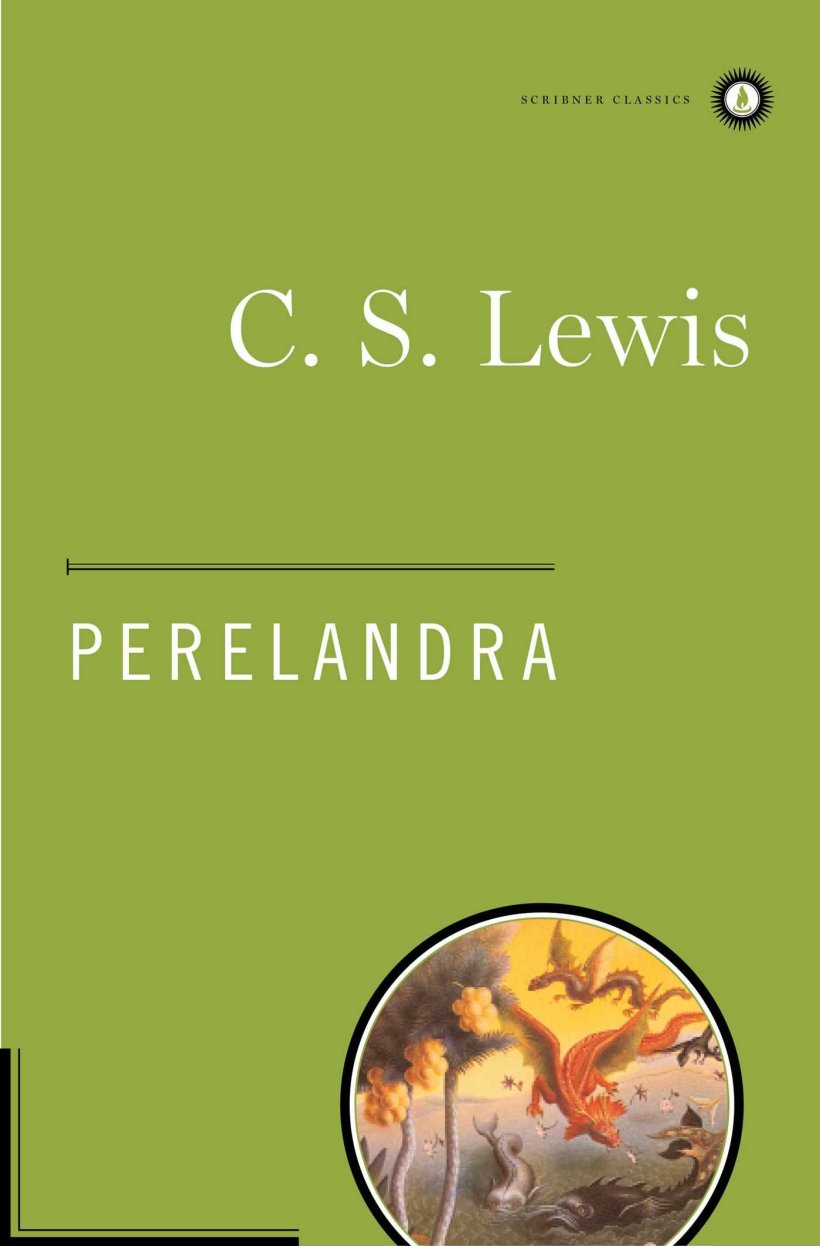
One could feel complete at the end of C.S. Lewis’ Out of the Silent Planet as Ransom safely lands on Earth and makes his way to the closest pub to enjoy a pint. The reader, like Ransom and his liquid reward for surviving, is given closure to this adventure through space and enlightenment of how immense and vast the possibilities of the universe can be. But one novel was not enough for C.S. Lewis. His inquisitive intellect desires to dive deeper into the rabbit hole of theology as he continues to ask “what if” questions in his sequel Perelandra. What if the creation of life was not just centralized to planet Earth? What if, like Copernicus and Galileo, mankind came to the realization that the Earth is not the center of the universe but merely a part of an even greater story. He asks the question, what if a powerful entity veered from its even more powerful creator? And what would a world look like before sin was introduced to it. These questions and so many more are presented as Ransom is catapulted to the mysterious planet of Perelandra, or as humans know it, Venus.

Lewis states in his preface, “All the human characters in this book are purely fictitious and none of them is allegorical”. As he states none of the “human characters” are allegorical I can’t help believe everything else is. Is Malacandra not allegorically representative of a time of peace of the Earth, but on Mars? Is Perelandra allegorically representative of Genesis on Earth, but on Venus? And is there not some correlation of a man possessed by evil, Adolf Hitler, trying to conquer islands of the world on earth through war while at the same time Ransom is fighting evil for the salvation of a mythical world with floating islands? Whether it be allegorical or not, I love the concept of taking true Biblical history and rewriting it mythologically. And so for his great achievement of reaching the masses by showcasing good versus evil in a universal way I raise my glass to the most extraordinary non-allegorical allegorical writer of the 20th century.

Cheers!!!

Out of the Silent Planet

C.S. Lewis

Discussion Prompt by Seth Loh

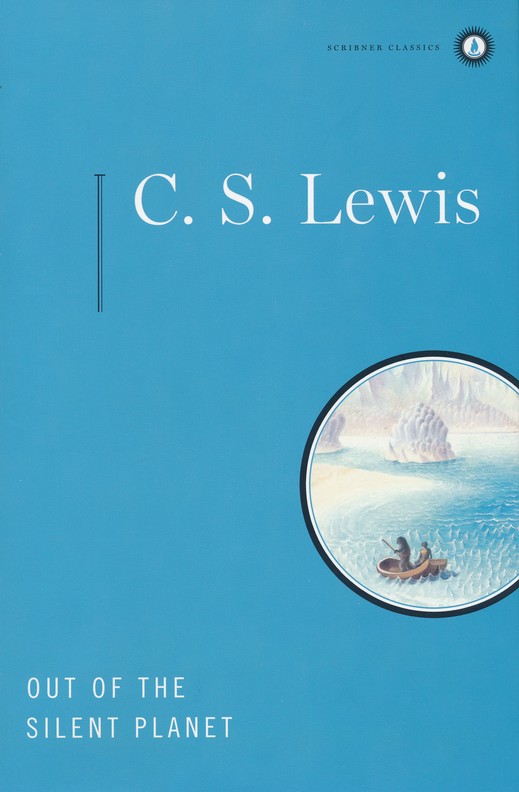
Legend has it that one day, C.S. Lewis and J.R.R Tolkien were enjoying a pint together when Lewis remarked, “Tollers, there is too little of what we really like in stories. I am afraid we shall have to write some ourselves.” So, they each agreed to write a story. Tolkien was tasked with writing about time travel and, sadly, never finished his story “The Lost Road.” Lewis, on the other hand, was to write about space travel, and from their friendly agreement the first book of the Ransom trilogy Out of the Silent Planet was born. 

Set in “the heavens” (rather than “space”) to highlight a universe full of warmth, light, and color instead of cold and dark emptiness, the story recounts the adventure of philologist Dr. Ransom on the planet Malacandra. Modeled as an antithesis to the H.G.Wells novel, The First Men in The Moon, Ransom arrives on Malacandra as a captive of crazed physicist, Weston, and Ransom’s greedy schoolfellow, Devine. Their intent is to offer Ransom as a sacrifice to the inhabitants of the planet, but despite their plans, a terrified Ransom escapes into the unknown wilds of the new planet. He eventually comes across a “man-sized, otter-like” extra-terrestrial (known as a hross) that seems to be “talking” when the sudden realization that the creatures on the planet have the ability to reason and communicate overshadow all of Ransom’s present fears. He finds refuge with the hrossa, learns their language and habits, their love for poetry and heroism, and even undertakes a rite of passage in hunting the dangerous, shark-like hnakra before the climactic meeting with Oyarsa, the spiritual ruler of of the planet.

Throughout the story, we discover the power of the human imagination to instill hope or fear, the beauty of language to unite and enhance our relationships, and the importance of humility and perspective when in comes to loving our neighbor as ourselves. After all, who is our neighbor? What if they were unlike us in form or function? Does the love of kindred trump the love of other…even if all are “hnau”? Ransom is humbled to discover his own “bent” nature and is forced to come to grips with his own fears and ignorance. At one point, after all of Ransom’s “running”, he ends up standing “face to face” (if you could call it that) with the Oyarsa of Malacandra. As he stands there, nervous, he feels a “tingling of his blood and a pricking on his finger as if lightning were near him,” when Oyarsa asks, ‘What are you so afraid of, Ransom of Thulcandra?”

Perhaps it’s appropriate to ask ourselves the same question. What are we so afraid of? Or to put it another way, what have we idolized that has bent the way we view others and act towards them? More still, when face to face with something truly “other-worldly,” such as Oyarsa, how would we respond? With humility, awe, and submission? Or would we arrogantly and greedily press on in our fear and ignorance as Weston and Devine did – and thus miss out on something greater? 

Cheers to Lewis for once again causing us, through the power of imaginative supposal and fiction, to question what is really good, true, and beautiful. May we always reflect on and, even now, explore those ideas further.

Monsignor Quixote

By Rob Travis

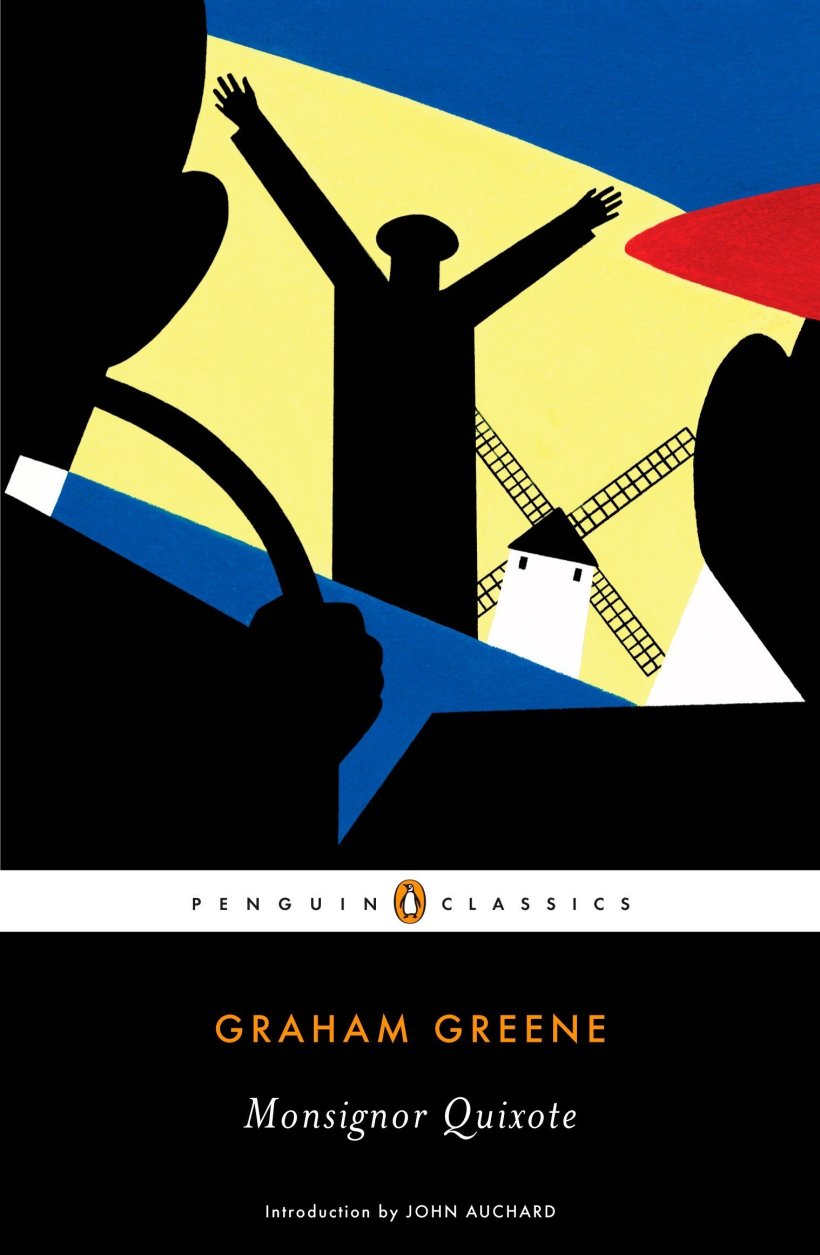
“Most men live lives of quiet Desperation”—so the philosopher Henry David Thoreau came to think. Not so says the Christian; each day is an adventure in service to our Lord. Without this realization constantly with us I fear Thoreau was right. 


What of our heroes—-Monsignor Quixote and Sancho. In their everyday life in El Toboso, I’m afraid quiet desperation was ubiquitous. But then the road trip and the adventure begins. Our thoughts are more easily expressed while traveling with a companion. Lubricated by the wine, our doubts are laid bare, friendship through common adventure bonds us; and then the TEST presents itself. 


My “Lady”– be it Dulcinea or the mother of Jesus — is insulted, I must go into battle, no matter the cost. This life is secondary to the cause, to honor, and to our faith.


In the end The Mass and offering the blood of Christ and the body of Christ to his dear friend and him receiving it; Don Quixote de la. Mancha and his gentle and meek descendant The Monsignor Quixote triumph in honor and glory.

Life of Pi

Discussion Précis by Matt Davis

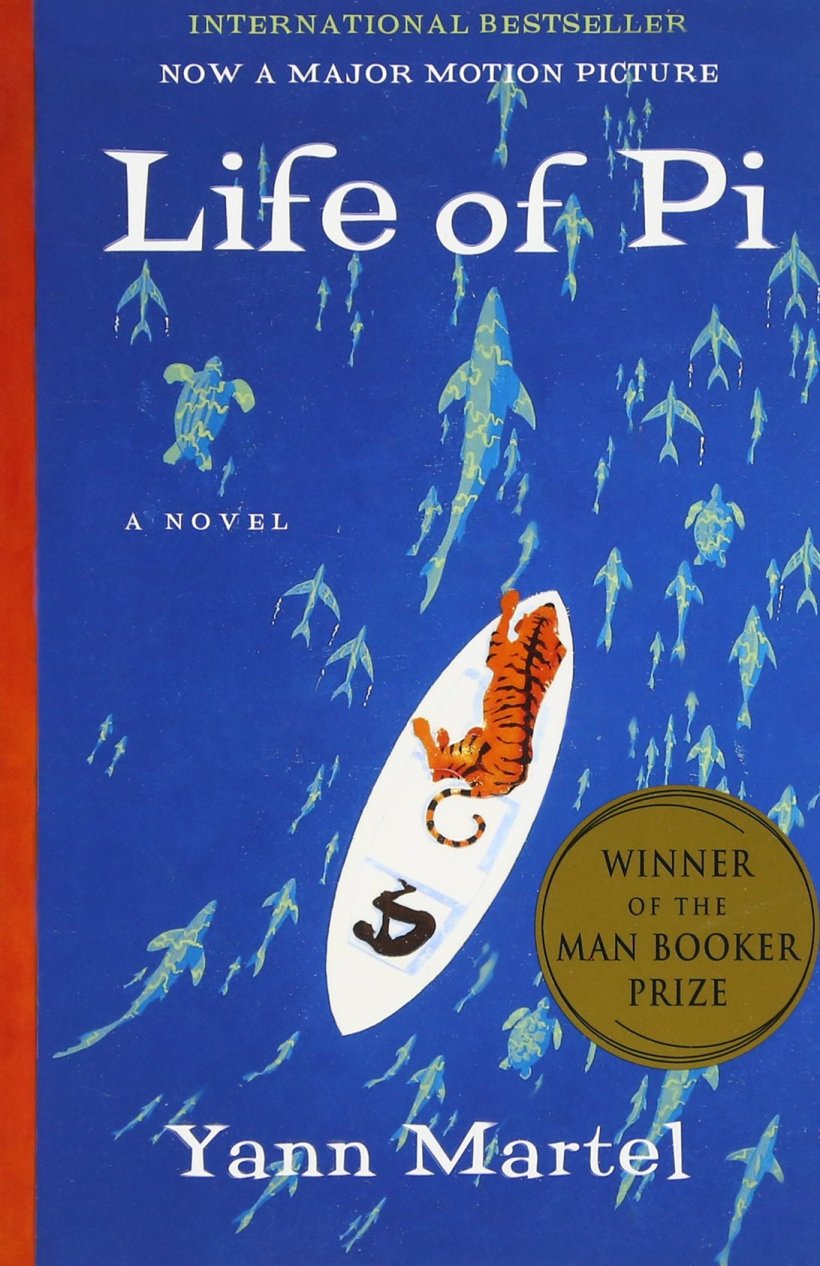
The Life of Pi, although a fictional story, is a reminder that everyone has a story. The Life of Matt Davis. Life of John Silverwood (Black Wave). The Life of Jeff Pratt. The Life of Rob Travis. We each have a story of growth, learning, adventure, and faith/salvation. Each story is important and includes harrowing adventures, especially for whose who lived it. We each have a story of our formative years. We each have moments of learning and development. We each face down our own tigers, especially those within. And, we each walk a journey of faith and are faced with the opportunity of salvation.

The story that Martel tells through the eyes of Patel is incredibly realistic and engaging. We are drawn into his story, being able see, taste, touch, and feel the experiences of Pi. I had to google many times “Is Life of Pi a real story?” How could someone tell a story like that and not have walked it themselves. Amazing! 

We ask ourselves, what is the point of the story? Is it the story itself, or what is our takeaway? 

For me, the takeaway is the struggle with a tiger that saved Pi’s life — the proverbial “thorn in his side” that saved his life. Is that not true in our own lives? We seek to have challenges or struggles removed from our lives, but God tells us His grace is sufficient. Through that struggle we learn to lean into the Lord, stand up with courage, and in the end, conquer through Christ. And, with hindsight, appreciate the struggle for how God used it to bring us to repentance and dependency on Him.

We are a people made for “story.” God tells His story through the greatest story of all time—pointing all towards Christ. Jesus comes and tells stories to the people during his time. We are called as God’s people to share our testimonies (share about Him unto the nations). How are we going to tell our story in a way that will bring individuals to “Believe in God” — like Patel’s story? I would suggest that Patel told the wrong version of the story if his goal was to bring us to believe in God. His animal story was a great story that was incredible. And one might say, “it’s a miracle that Pi survived—there must be a God!” Or, the the real story of human depravity, selfishness, and greed. It goes to show how great is our need for a SAVIOR! 

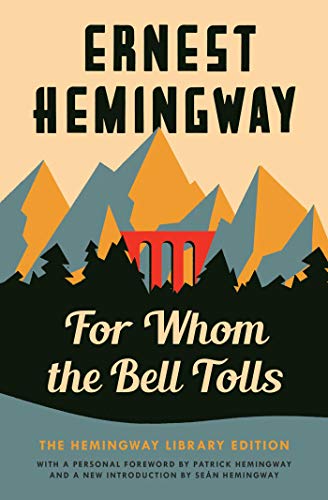
For Whom The Bell Tolls

Discussion Précis by Dr. Jeff Spivak

The Knight, the Virgin and the Dragon

Knight-errant appears on the scene, 
Without fear and beyond reproach,
Out of nowhere, fully formed,
One with the earth, the forest and the sky.
He knows horses, brings down bridges,
He judges men and, playing dice with death,
Sets out on a quest to slay the Dragon.

Arriving at the mouth of a cave,
He’s greeted by the Wise Woman,
The Seer and the Mother of her people.
She reads his palm and, satisfied,
She thrusts his prize upon him:
A maiden rescued from the Dragon.

The maiden, virginal Maria,
Vulnerable and beautiful,
Just coming into blossom,
Holding out the promise of fruitfulness.

She sees the Knight, and she is his,
Their union sealed with a True Love’s Kiss.
In his embrace, her dreadful wound is healed,
In his embrace, her virginity is restored.
Their lovemaking moves the earth,
Their whole life lived in a day.

The Old Wise Woman, next,
Leads Knight and Maiden through the woods,
To meet her friend, the Old Wise Man,
Who, though deaf, can hear better than the young.
And there and then the lot is cast:
The Old Wise Man enlists to aid the shining Knight,
To help the vile Dragon slay,
And end his people’s sorry plight.

Back in the cave, the Traitor,
Worn out, drunken and despised,
Broods on in sullen silence,
By fear of the Dragon overcome.
Though of his treachery aware, The Knight,
Has not the heart to spill the poisoned blood,
And lets him live.

As snow falls, the battle is joined.
Surrounded and outnumbered,
Among the rocks that crown a barren hill,
The Old Wise Man takes his last stand,
And, fearing nor foe nor death,
Falls like an ancient oak falls,
Magnificent in his demise.

The final hour arrives. The Knight,
Rides out to meet the Dragon’s fiefs,
Sword drawn and flashing in the light,
He rides to glory and destruction,
To lay his life and let his Lady live.


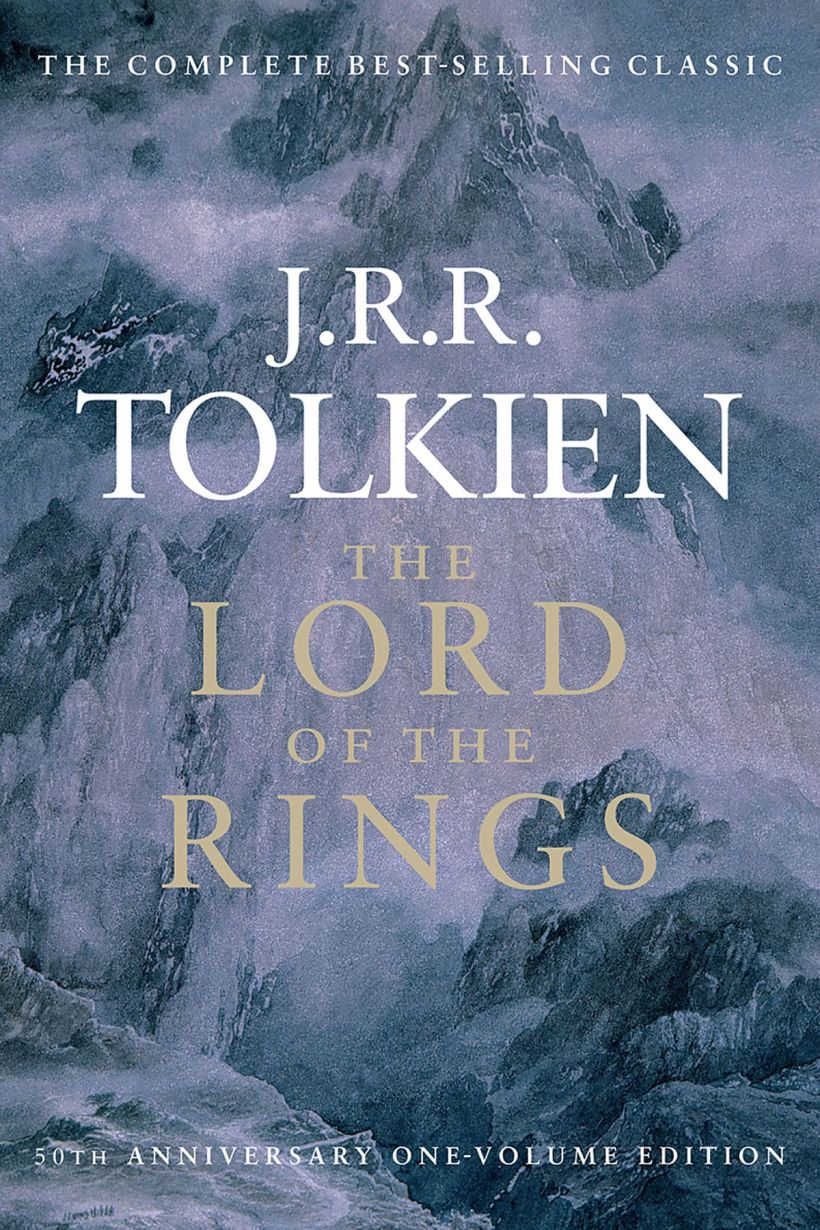
The Lord of the Rings

FROLLUM
A Jungian Reading of LotR

Précis by Dr. Jeff Spivak

Lord of the Rings is a riveting book. The tension, however, does not come merely from the uncertainty of whether or not Frodo would survive an encounter with one or another evil monster. The real tension, one would argue, comes from the uncertainty of whether or not Frodo himself would be corrupted into a monster by the evil he encounters. Would he end up another Gollum, with whom he becomes inseparable, or worse still another incarnation of Sauron, whose ring becomes inseparable from his finger?

Tolkien’s trilogy is not a simplistic good-vs-evil story. What elevates it to the level of psychological non-fiction is the fact that, at the final critical juncture, our hero succumbs to the draw of evil and finds himself incapable of casting the ring into the fire. Thus, Frodo emerges from the depths of Mount Doom with an uneasy enlightenment: evil is not reserved for obviously unpleasant beings – in fact, he, an ordinary, decent hobbit, has within himself a potential for malice that would rival that of an orc, and that he is exceedingly lucky to retain his human face.

This deeply traumatic experience is the making of Frodo: an innocent, carefree Shireling returns having lost a finger and having gained the truth about himself. Having left as a nice guy, Frodo comes back as a wise man. LotR is a growing-up story.

Among the psychologists, the notion of dualism of human nature is associated particularly with Carl Gustav Jung, one of the founding fathers of the discipline in the early decades of the 20th century. For Jung, every child is born with the common human psychological blueprint, the so-called Collective Unconscious, the map of the possibilities and prospects for psychological development. This map, which contains the full potentiality for both good and evil, in the infant becomes a vast and undiscovered Self.

As the child develops, the Self increasingly refracts into the conscious and subconscious parts: the socially acceptable traits become established as the conscious Ego, while the unacceptable traits become repressed into the subconscious Shadow. The person grows into a nice guy, whose outward Hobbit personality keeps the lid on the vast subterranean Gollum part of his psyche, the dark cavern filled with nightmares, sadistic urges, fantasies of rape and impulses to murder. Needless to say, the Hobbit can survive only by denying the repressed Gollum: “I can’t believe that Gollum was connected with Hobbits, however distantly… what an abominable notion!” Tolkien, appropriately, begins his tale with Frodo noticing his own Shadow for the first time, and refusing to acknowledge it with genuine indignation.

The problem, of course, is that Gollum, “a slimy creature”, remains regardless, and is liable to escape. In dreams, when caught off guard, tired, tempted or stressed, conscious control lapses and Gollum comes out to menace Hobbit with neurosis, or guilt, or depression, or outright violence. Being a nice guy is a superficial and insecure business.

Given the above, it is no surprise that the Jungian path to psychological integrity, the so-called “individuation”, is a process of drawing the Shadow out into the light of conscious awareness and coming to terms with its existence. In LotR, Frodo’s journey above all is a journey of individuation: it is a tale of Frodo’s progress from denial, to wishing Gollum dead, to putting up with him, to finally recognising Gollum as his inseparable antithetical twin. It is at this point that the dichotomy between the Ego and the Shadow gets resolved, Frodo reaches individuation and Gollum disappears as a separate entity. Frollum returns and finds that he is no longer at home in the innocent, carefree Shire – he has to go and dwell with the weary Elves.

The Hobbit

Summary/Discussion Prompt by Jeff Pratt

The Hobbit by J.R.R. Tolkien could be considered one starting point of the epic tales of a fictitious land called “Middle Earth.”  Like our own, real, epic stories, it is often difficult to mark “the beginning.” Bilbo Baggins discovered he was homesick at home and thus reluctantly followed Gandalf’s invitation to go on an adventure.  The dwarves suffered from homesickness in exile after being violently forced from their home by Smaug the dragon. All were called together by the wizard Gandalf at Baggin’s home in The Shire, and here the adventure began.

Like all adventures in life, the story of The Hobbit is really no different.  Perhaps a true adventure is defined by juxtaposition — the known with the unknown;  creaturely comfort with sleepless discomfort; good wit and sanity with intoxication & the psychotic;  security with danger; humility with pride; genteel and unassuming with powerful, brash & reckless; cowardice with courage; merciful….with vengeful & unforgiving.

Sometimes we discover that our adventures bring us to places that “stink of dragon” and the only food is “cram” which sticks in one’s throat (p. 278).  Such is life.

The Hobbit (& the Lord of the Rings) appears to be an extraordinary story about what the soul craves.  Whatever a person deems ultimate authority in life directly governs one’s ability to manage power, for where your treasure is there will your heart be also.

So, Ink & Stone comrades I wonder if something “Tookish” will awaken in us which will lead us to wear a sword in exchange for our “walking sticks,” and, discover if there is, as Gandalf might say — “more about us than anyone (including ourselves) expects?” (Gandalf, p. 285) 

Candide

Summary by Gregory Thornquest

Since creation humans have asked, is there more? Adventurers seek treasure, conquerors seek domination, philosophers seek truth, and Candide seeks the love of Cunegonde. In the novel Candide by Voltaire we are immersed in the world view of the Age of Enlightenment. Liberty, reason, natural and moral philosophy, the value of human life, equality, Providence, and virtue are all continuous themes throughout this literary protest of the status quo of his time.

The main character Candide is born into a life of prosperity and has that prosperity taken from him.  He first possesses a meniscal knowledge of the greater world but through his extraordinary adventures his eyes, as well as the reader’s, are opened to a greater education of humanity as he travels all over the new globe of the 18th century. From Germany to South America and England to Constantinople we are introduced to many cultures that may appear different from first glance but share in a similar hierarchy of society and the treatment of human beings. Our only contrasting society is the mythical city of El Dorado. As we read we are confronted with the sinful nature of mankind and forced to question its moral philosophy and inhuman treatment of one another. As Candide’s veil of affluence is torn he is catapulted to a straightforward and honest uncovering of reality, one not provided while behind the walls of the Baron of Thunder-ten-Tronckh’s castle in Westphalia.

A strong theme throughout this novel is the question, is everything in the world for the best? With this question introduced in the beginning by Pangloss “the greatest philosopher of the whole province, and consequently of the whole world” we walk through a folly of experiences unveiling tragedy after tragedy filled with unmeasurable pain and atrocities due to the “three great evils – weariness, vice, and want”. How can murder, rape, theft, slavery, and life’s many other evils possibly be for the best? Voltaire’s satire concludes with all of life’s tragedies being worth it as long as we end up married to an ugly woman and a garden to cultivate. Or does it?