Horseman Pass By

Discussion Prompt by Bryan White

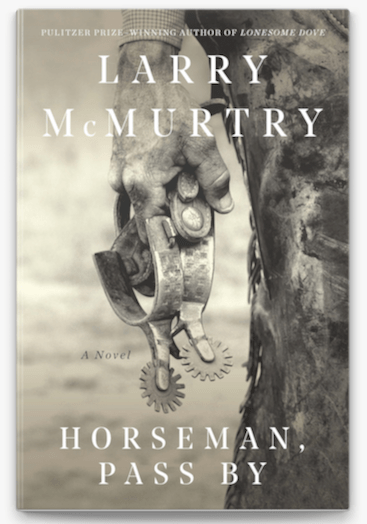
  As I sit to consider how to kick off our discussion concerning our easy, breezy, feel-good book of the summer, Larry McMurtry’s Horseman, Pass By, the most obvious thing that stands out is that I’m not sure I need to do much provoking here—the book is plenty provocative without me. So I want to turn a little bit to what we might expect out of a western, and what we get here.

              In the western genre, we typically see a hero cowboy come into a territory that he needs to bring under control. Whether that control comes through the overpowering of the Native Americans that live there, or whether that’s through the defeat of some malfeasant, corrupt local body, one thing is clear to the reader—our hero deserves that territory. He is in the right, and whoever or whatever the other is is in the wrong.

              McMurtry’s novel doesn’t seem to follow this formula as closely, but it seems to me McMurtry is not interested in the above untroubled vision of the western. He wants to show the warts and all. We see the story from Lonnie’s perspective, so we’re encouraged to side with him and even think of him as our protagonist, but it’s difficult to say that the main character of the story is anyone other than Hud because to paraphrase Lonnie, Hud does whatever he wants to do. He looms large even in his frequent absences in the book. This is troubling, because Hud is no hero, and to my mind, he’s not even an anti-hero. He’s our antagonist/villain. He starts the novel by taking the last of the peach ice cream when not everybody has had some. He decides he wants Halmea, so he assaults her. He decides he is owed the ranch even before it’s passed down to him, so he sells a part of it in a convoluted deal. There’s some vagueness concerning his murder of Homer at the end, but it’s clear that Hud wants rid of him throughout the novel, and he gets that too.
              In short, we have our main character, untroubled by taking what he wants, just as in a traditional western, but here, it’s not clear to the reader he deserves it. We are troubled by this critique of the genre through a creation within the genre. All Lonnie can do in the novel is to simply leave; he can’t live in a world where Hud’s the one in charge.

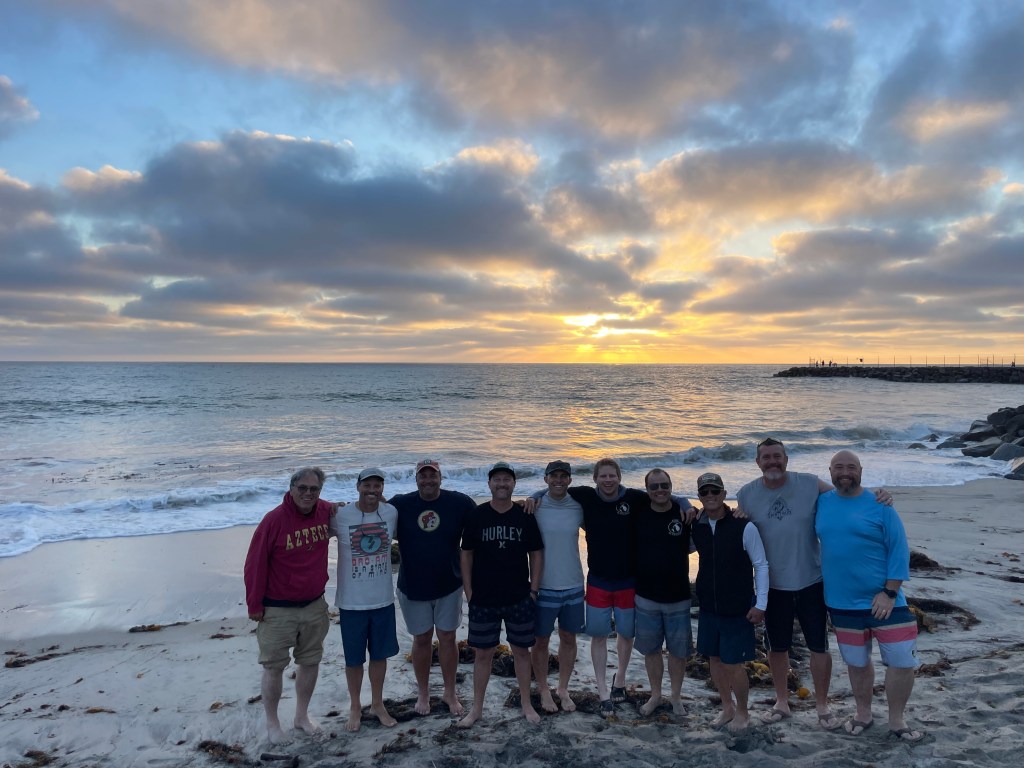
              So as we sit here about as far west as we can be without getting wet, having staked out our own plot of land, considering the merits of this book or whether, to paraphrase a great turn of phrase by Seth, we should have let this horseman pass by, I hope we can be untroubled in our discussion and our time together.

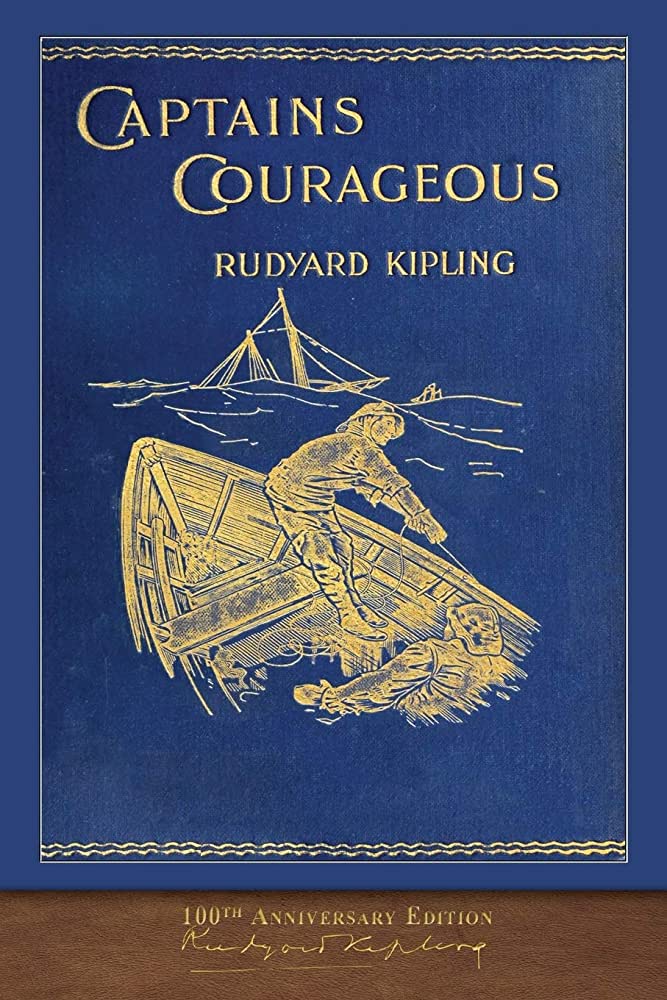
Captains Courageous

Discussion précis by Robert Travis

A 15 year old spoiled rich kid falls overboard on a luxury liner off the Grand Banks of New England and gets picked up by a cod fisherman. Four months later he has been transformed into a respectful, and industrious young man. What meaning can we take from this story? It seems Kipling is saying that being part of a group of men who face danger and a hard life in order to achieve a worthy goal is perhaps the essence of a good life. More than that though is doing something well with some degree of expertise. Disko’s “We’re Here” did it right, some others sunk when they did it wrong; there is no honor in doing it wrong. 

“The sea is selective, slow at recognition of effort and aptitude, but quick in sinking the unfit” Felix Riesenberg

For us who consider ourselves as Christian men, we also consider ourselves as transformed, the old self is dead and we are anew and alive now in Christ. Our actions should like the men of the “We’re Here” bring us a good catch; however you imagine that as manifesting itself. 

Christian or not the principle Kipling puts forward applies to all men. Men who are willing to work hard and expertly to achieve a worthy goal; that is a good life. Kipling’s poem “If” is another example of his thinking of what is required to be a good man; if you haven’t read it, it is a great read (see below).

It’s eight bells and we are all ready for some healthy grog.


If
By Rudyard Kipling

If you can keep your head when all about you   

    Are losing theirs and blaming it on you,   

If you can trust yourself when all men doubt you,

    But make allowance for their doubting too;   

If you can wait and not be tired by waiting,

    Or being lied about, don’t deal in lies,

Or being hated, don’t give way to hating,

    And yet don’t look too good, nor talk too wise:

If you can dream—and not make dreams your master;   

    If you can think—and not make thoughts your aim;   

If you can meet with Triumph and Disaster

    And treat those two impostors just the same;   

If you can bear to hear the truth you’ve spoken

    Twisted by knaves to make a trap for fools,

Or watch the things you gave your life to, broken,

    And stoop and build ’em up with worn-out tools:

If you can make one heap of all your winnings

    And risk it on one turn of pitch-and-toss,

And lose, and start again at your beginnings

    And never breathe a word about your loss;

If you can force your heart and nerve and sinew

    To serve your turn long after they are gone,   

And so hold on when there is nothing in you

    Except the Will which says to them: ‘Hold on!’

If you can talk with crowds and keep your virtue,   

    Or walk with Kings—nor lose the common touch,

If neither foes nor loving friends can hurt you,

    If all men count with you, but none too much;

If you can fill the unforgiving minute

    With sixty seconds’ worth of distance run,   

Yours is the Earth and everything that’s in it,   

    And—which is more—you’ll be a Man, my son!

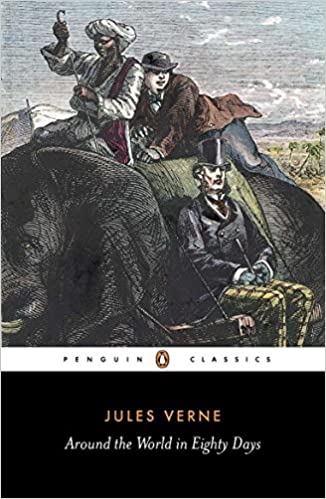
Around the World in 80 Days

By Jules Verne

Discussion Précis by Gregory Thornquest

What adventure sounds impossible to you? Does stepping onto a sailboat in San Diego tomorrow and ending up in Athens, Greece sound feasible? How about flying to Santiago, Chile tonight, hoping into a Toyota 4Runner and driving to Nome, Alaska? Or could you see yourself in a couple days loading onto the next SpaceX Starship and taking an orbital journey around the planet? For a very small few with an exuberant amount of time and money these epic adventures could be possible, but for the vast amount of the population these trips are unobtainable.

In Jules Verne’s classic novel Around the World in 80 Days what seems like an unobtainable task to the practical comes down to mere formality for an eccentric English gentleman named Phileas Fogg. This adventure, written and published in 1872 by a Frenchman about an Englishman, begins at the Reform Club of England with a very unexpected and unbelievable wager for the present time of 1872. The challenge of traveling across the world in 80 days is introduced and accepted. But can this “most uncommunicative of gentlemen” that “talked as little as possible” really achieve such an extraordinary task? As the reader is dragged upon steamships, railways, carriages, yachts, a sledge, and many other transports, some of which have tusks, they are brought on a journey that they could never experience for themselves, especially in the 19th century.

Although Jules Verne may or may not have have intended this novel to have a feeling of exploring with National Geographic at the time, it reminds me of how important it is to read classical works of literature in order to remember history. In a current era of Hollywood trying to convince people how bad colonialism was I find it refreshing to be reminded of a time where peoples openly worshiped demons and committed horrific acts of human sacrifice to those demonic gods through their religious practices. I for one would rather not have those in my present time.

In addition to enlightening the reader on social behaviors of people throughout the world from European aristocrats to the American Sioux the novel forces one to ponder and question, especially in a time of exaggerated super heroes, what does true heroism look like. Would we produce the same virtues demonstrated as Mr. Fogg, to “risk life, freedom, and the success of a project, without hesitation to do what is right”? Ironically in the story Phileas is described as “a man of iron” and then “A man of steel” by his servant and companion on the trip Passepartout. Although Jules Verne uses these terms decades before writer Jerry Siegel and DC Comics uses them to describe Superman the main character exhibits his unchanging moral compass and exemplifies prudence, justice, courage, temperance, faith, hope, and love. May we all work to one day have others describe us with the same characteristics.

Pilgrim At Tinker Creek

By Annie Dillard

Discussion Précis by Jeff Pratt
Saturday, 03/04/23

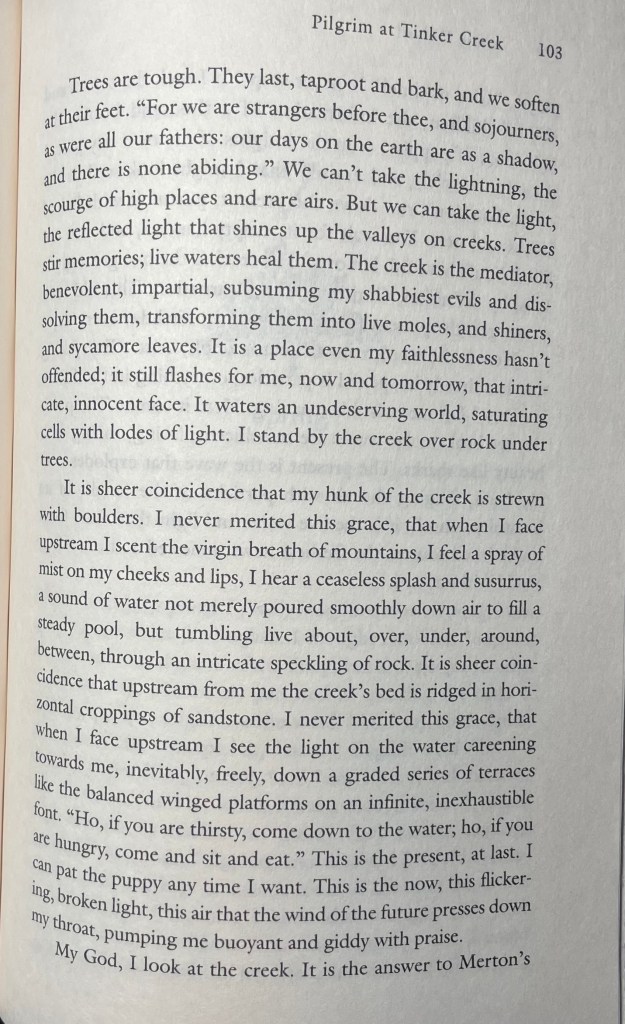
You know, when you hear the author say of herself that the book The Strange Lives of Familiar Insects (p. 170) is a book that she could not live without, that you are in for a different kind of literary adventure.  I learned in the Afterword that Annie Dillard was 27 years old when she began writing The Pilgrim at Tinker Creek  – for perspective, this is the age of my first born child, also a woman like Annie Dillard, with some powerful gifts with words.  Yet Annie Dillard’s gift with words is true fecundity – like the title of ch 10 using this term – they have the ability to “produce many new ideas; an abundance of new growth, or fertility.”  She employs words to do OH SO MUCH more than communicate her profound power of observation and contemplation of nature, but also envelop complexity (at times to the degree of befuddlement, at least for me) from her extensive reading and research.  In one moment I was moved to tears by the shear intense beauty of her words, and other moments tattered by being “forced to drink too much from a fire hose” or whiplashed because when I thought I was being directed to consider the implausibility of the force and growth-rate of plant roots, for example, I am the next moment trying to process biblical illusion or non-Platonic philosophy.  Her writing is extraordinary, and it would be simply remiss to not hear a significant portion read aloud. I have chosen this excerpt from her chapter titled “The Present” :

“You don’t run down the present…you wait for it, empty handed and you are filled.”  This is how you “pilgrim.” And, as far as we know, humans are the only creatures in all creation who have the ability to “pilgrim” –  to observe nature, conduct a meta-analysis of our observing, to “wait” and consider what it means to be filled.  Near the end of her book, Dillard writes, “Come on, I say to the creek, surprise me; and it does, with each new drop. Beauty is real. I would never deny it; the appalling thing is that I forget it.” (p. 271).  Gents, as we lift a glass and dive into this Pulitzer prize work, I ask us to consider, in what ways have you tried to “chase down the present” and forgotten beauty?  Cheers!


Audiobook – click to open Chapter 1 “Heaven and Earth in Jest” read by J. Pratt
Chapter 1 pages 3-11
Chapter 1 pages 11-15

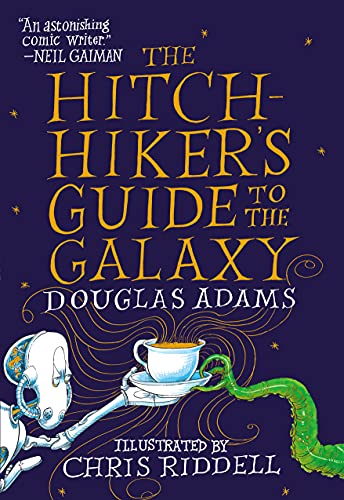
Hitchhikers Guide to the Galaxy

Discussion Provocation by Bryan White

I started and stopped the writing of this provocation several times as I found myself at a loss for how to provoke with a book that seems so light, fun, and airy, but I then thought about one of the central aspects of the story—the idea that a computer computed that the answer to life, the universe, and everything was simply the number 42, and that if that didn’t make sense, it was because those who were asking needed to come up with a better question. When I think about The Hitchhiker’s Guide to the Galaxy, it itself seems like an answer to the question, “What would a novel look like if an author chose what they found most amusing at every turn with few considerations for plotting, character development, or frankly, how millennia of storytelling have shown us how to tell stories?” Consider our protagonist, Arthur Dent. Traditionally, main characters are the do-ers of the story, but Arthur more than just about any other main character I can think of has things done to him rather than does things. I think first of how, faced with the destruction of his house, his active decision is to—passively lie before the bulldozer.

I think also about how one of the most decried literary devices, the deus ex machina, occurs again and again in this book as our hero and his rag-tag bunch of companions find themselves in troubling circumstances, facing death, and at the last moment, an unknowable force shows up to set things straight and save them—this is particularly interesting in a book that is at least a-religious if not anti-religious. (Admittedly these are not true examples of deus ex machina as a literal god does not show up, but DON’T PANIC.) Consider, for example, Arthur and Ford Prefect being expelled from the Vogon ship and at the absolute, literal, last second, finding themselves on the ship of Zaphod Beeblebrox and Trillian.

I also think of ludicrous plotlines such as one in which someone would become president for the sole purpose of enriching themselves by stealing great pieces of wealth and technology—well, perhaps that isn’t so ludicrous. As these and other things rattled around in my brainbox—surely there must be more to why a towel is so important for interstellar hitchhiking?—some more troubling questions came into my head. What are we to make of the scourge of bureaucracy in this book? Is everybody in the book (and, perhaps, at large) just making it up and lying about it all as they go along (see: the mice at the end)? How am I expected to keep it together when super intelligent shades of the color blue are mentioned but not more fully developed?

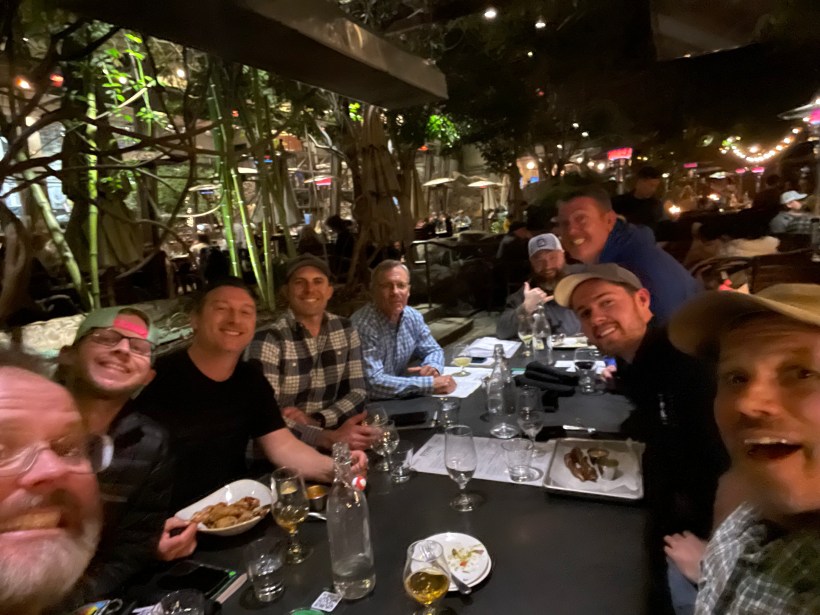
But it is here that I myself must take the advice of the book and not panic. This book has remained in the pop cultural zeitgeist for over forty years, having been before that a popular radio play on the BBC. For our discussion tonight, I am very curious how this book hit those of you who read it when you were younger, versus those who are reading it now (like me) for the first time, and I’m also curious how those who listened, versus read, experienced it (knowing that it was first a radio play). With that all said, as we are here meeting at a Restaurant and Brewery at the End of Escondido, we continue the work of Douglas Adams by discussing and considering his work and legacy. I hope you brought your towels.

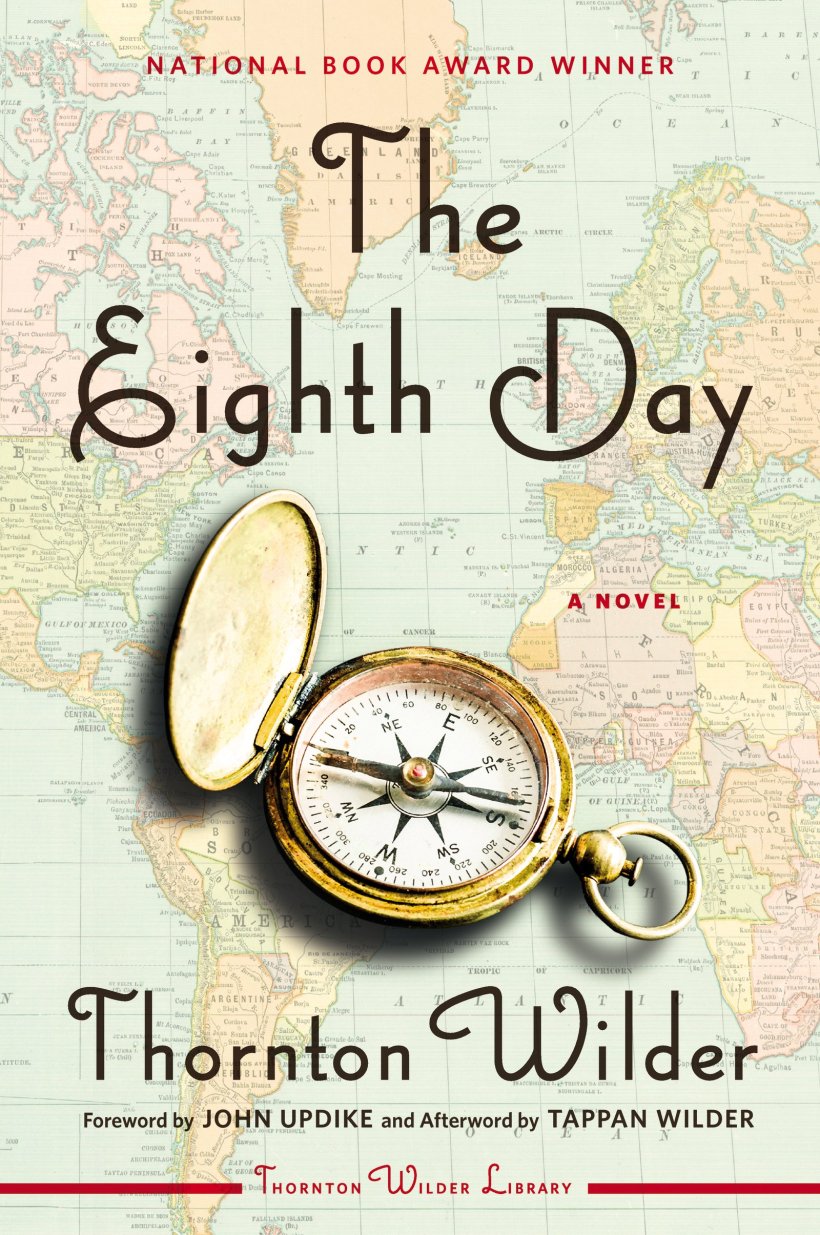
The Eighth Day

By Thornton Wilder

Discussion prompt by Seth Loh


There was a moment while reading The Eighth Day, when I wondered, “How on earth did this novel beat The Chosen for a National Book award in 1968?”  What’s more, how can the back of the book describe this piece of literature as “at once a  murder mystery and philosophical story,” or a “great American epic?” While I sill might ponder these question, after finishing the novel I must admit I have grown to respect it for what it is: A philosophy of the Wilder “Ubermensche.” 

The story opens in “Coaltown USA” and follows the lives of two families, The Ashleys and The Lansings, after the supposed murder of Breckenridge Lansing by John Ashley. Right from the get go it seems highly improbable that Ashley is the murderer since John Ashley is Wilder’s version of the perfect American hero, and his character is upright, practical, and helpful. How does he escape his sentence and where does he go? How will his family cope? The book unfolds in a nonlinear fashion from there as the reader discovers how the characters met, and the impact that the sentence had on the different people in each of the families. What’s become of John Ashley? Somehow he made his way to Chile and he continues to be a steady, faithful, helpful, albeit a bit boring, friend to all he encounters – mostly as he uses his engineering skills to improve the lives of those around him. (For more in depth plot and analysis see – https://www.twildersociety.org/works/the-eighth-day/ has a deeper write-up.)

I’ll leave you with a thought the book impressed upon me…If “the eighth day” is supposed to be a reference to the 8th day of creation and therefore the day for man to progress…what does true heroic progress look like? It would seem that Wilder envisions an America that “John Ashley built.” For the Christ follower, it’s nothing less than that death to self that allows for the sanctification process to begin. Though Wilder’s vision may have been a bit overly humanistic, we can still glean wisdom from seeing Ashley’s faith in progress and in helping others. May it inspire all of us to look to how our faith in Jesus’s redemptive work can lead us to love his people and usher in His Kingdom all the more. 

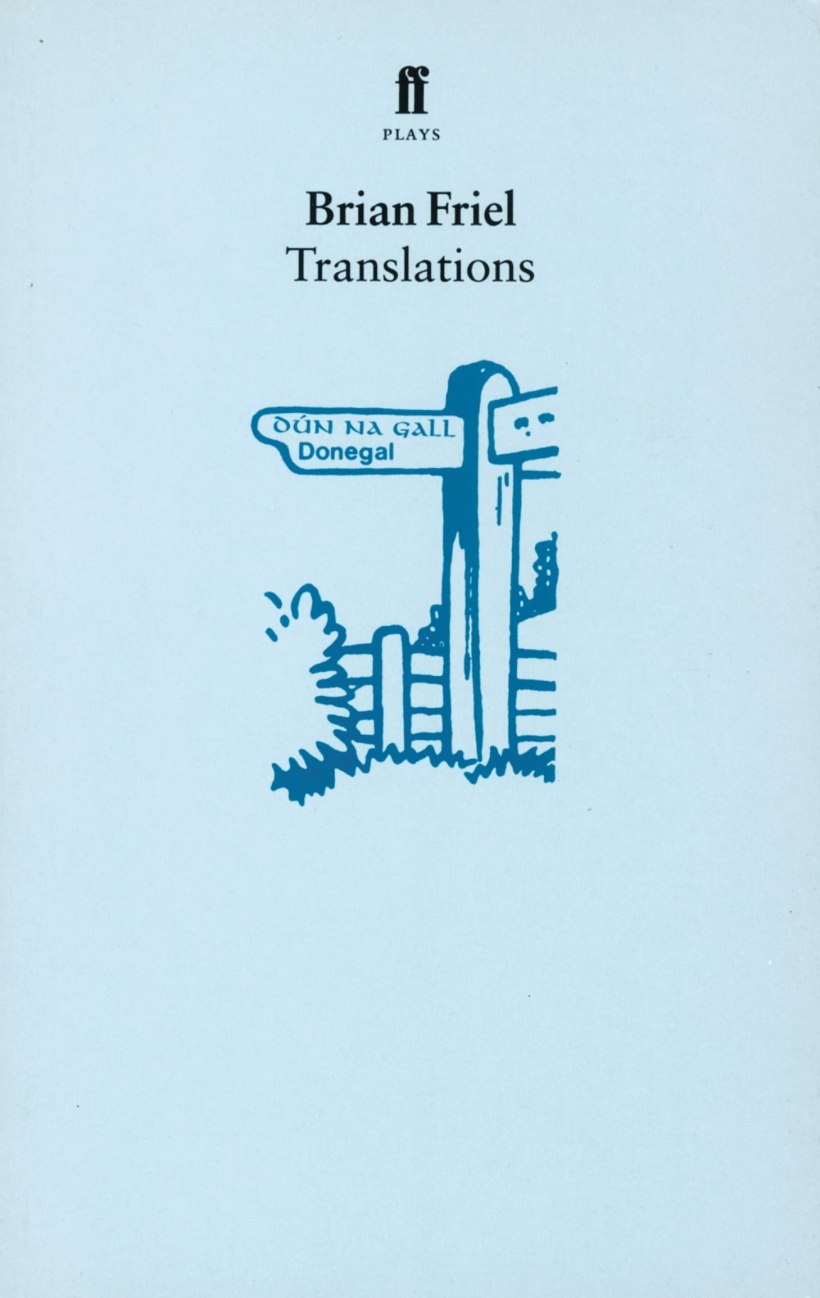
Translation by Brian Friel

Discussion Prompt by Bryan White

A Brief Overview of Irish History:

  • 420 AD – St. Patrick, 1200s – English Conquer, 1541 – Henry VIII King of Ireland
  •  1540s-1651 – Plantation System, 1600s – Penal Laws (outlawed Catholic clergy)
  •  1798 – Wolfe Tone’s Rebellion, 1800 – United Kingdom formed
  • 1830s – Ordnance Survey and Tithe War, 1845-51 – Great Famine
  • 1916 – Easter Rising, 1919-21 – War of Independence and Free State, 1921-23 – Civil War
  • 1937 – Constitution and the Creation of Éire (the Republic of Ireland)
  •  1969 – Start of The Troubles, 1998 – Good Friday/Belfast Agreement

Just as there myriad differences that make it difficult to pinpoint who and what Ireland is (Catholic vs Protestant, Republican vs Unionist, the agrarian West vs the cosmopolitan East, Éire vs the North), there are many ways in which we might think of play Translations. As a jumping off point, I will briefly discuss two: the linguistic and the post-colonial.

Looking to linguistics, we might pay particular attention to the title itself. The word translation comes from two Latin words which mean “to carry” and “over” or “across.” So what exactly is being carried over? Our play starts with Manus attempting to carry over the unable or unwilling to speak Sarah into the world of being able to say her name. We see Hugh doing his drunken best to carry over his students into the knowledge of the hedge school. We see Owen and the two officers attempting to carry over the little village of Baile Beag (which means “little town”) into name and place standardization; it is this lattermost carrying that sets the events in motion. 

Why should be care about this bureaucratic issue of naming? As Shakespeare has Juliet say, “What’s in a name? That which we call a rose by any other name would smell as sweet.” If signifiers are necessarily imprecise representations of the things signified, then the word itself shouldn’t matter, should it? And yet, as we sit here looking out on the ocean, take a moment to think what is wrapped up in your own mind in a word as innocuous as ocean—what aspects are unique to your understanding of it? Or how many disagreements with your spouse have come from the two of you each understanding the same word differently? So part of understanding a word comes not just in what the thing is but also in how it is received. As we hear Owen wrestling with the histories of the places he is working to re-name that will necessarily be lost in translation, we understand that something deeper is at stake.

For those unfamiliar, Post-colonialism is, in a nutshell, the question of what happens to nation once a colonizing force leaves. As I argued in my dissertation (hair flip), so much of the drama and theatre which was written in Ireland in the last century is about Irish playwrights dealing with various national traumas and trying to come to terms with what it meant at the time of writing to be Irish, or about what it meant to not be British. Some of Brian Friel’s plays are agitprop in their revulsion at the British (see Freedom of the City), but it is worth noting that Friel took a much more even hand in Translations. Although we ultimately come to loathe Captain Lancey for his threats to murder livestock and raze the village, it is difficult not to be moved by the youthful exploits of Yolland as he finds himself intoxicated not just with the poteen, but with the landscapes and people, as is so beautifully shown in Act 2 Scene 2 between him and Maire. Although we might be drawn positively to Hugh and Manus and the hedge school, that school is run fairly shoddily from what we see by a drunk who more or less teaches when he feels like it. That it’s hard to even pinpoint who the protagonist is in this play underlines the fact, it seems, that Friel is trying to suggest there are multiple versions or, dare I say, translations of the ways in which Irish history and even the then-current crisis of The Troubles might be viewed. 

To briefly conclude, I leave us with this: the work we have read is necessarily incomplete. Unlike novels which are self-contained and finite or movies which become permanent records once filmed, plays must be performed and seen in order to fully transmit their meaning. There is no official production. Each new production means something different in its liveness as it is translated to living people. So as we come together, each of us not yet complete, each of us still learning what it means to be, let us be carried across into greater knowledge and fellowship with one another through our discussion. Sláinte

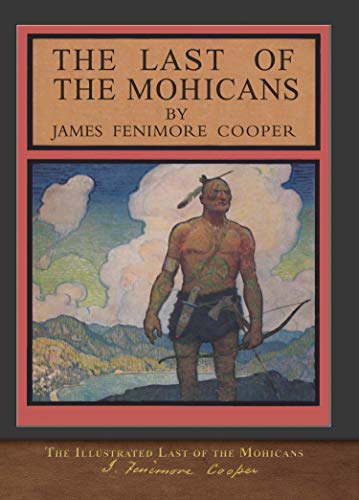
The Last of the Mohicans

By James Fenimore Cooper

Discussion Prompt by Gregory Thornquist

Almost 140 years before Stan Lee created his comic hero avenger wearing a purple costume readers were introduced to another warrior also with a deadeye shot named Hawkeye. In James Fenimore Cooper’s novel Last of the Mohicans we are brought along side a makeshift tribe of travelers that embark on an epic journey. In this historical fiction the reader is transported to the British American frontier of 1757. After more than 100 years of exploration and settlement of the “New World” France and Great Britain collide in a multi continental war over land. In the Americas this war is mainly over the Ohio River Valley and the great resources it possesses. As these two great European nations are playing King of the Hill so are the tribes of the Canadas to the colonies. No matter what the skin color of a man or woman one can always find the blood of Cain unfused within the veins of every tribe. Although a considerable portion of the novel is unveiled to us with the feeling of a naturalist peacefully walking through this beautiful country the plot is juxtaposed with tomahawks gliding into flesh, smoldering ammunition striking its human targets, and countless knives gathering their trophies from the heads of victims. There is definitely no lack of savagery amongst these people of a savage time. As any accomplished epic story should have, there are heroes and villains, damsels in distress, and wise old chiefs, but one character awkwardly stood out in the story like a single sunflower in a garden shining amongst a bed of weeds. The vocally praising, non rifle holding, fighter for goodwill to all, David, is definitely a Tom Bombadil of this story. And although neither characters could be found in a movie both produce a since of moral compass for those traveling along his way. This story of fellowship amongst a unique group of companions is a reminder to us today that although different in appearance, creed, and social stature we all bleed the same color and the only way to dilute the Cain within our own veins is through the pursuit of living a virtuous life.

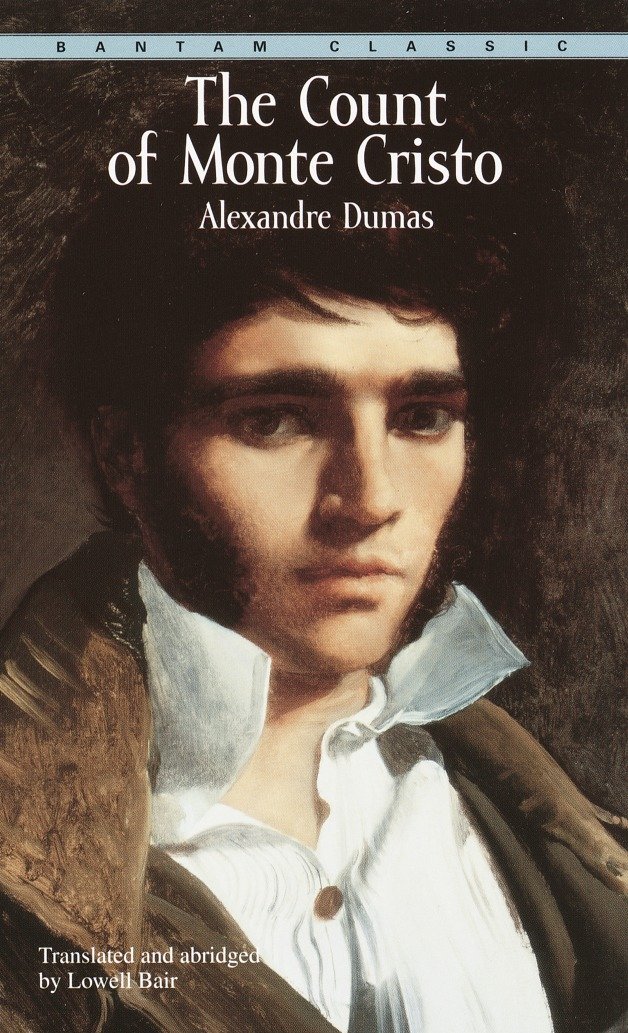
The Count of Monte Cristo

By Alexandre Dumas

Discussion prompt by Seth Loh

What would you do, if on the happiest day of your life, everything was taken away? Would you have the fortitude and strength of mind to remain hopeful? Would you forgive the men who were the cause of such misfortune? Would you seek vengeance?

The Count of Monte Cristo, by Alexander Dumas, follows the story of Edmond Dantes who, on the night of his betrothal feast is arrested, wrongfully accused, and sentenced to a dungeon on an island off the coast of France. He spends 14 years in a dark prison cell learning from a priest and planning an escape. When he miraculously pulls it off, he has lost not only 14 years of his life, but his fiancee has married one of the men who betrayed him, his father has died of hunger, and his other enemy has become one of the richest men in France. One glimmer of hope remained, the priest from the prison left him an immeasurable fortune. Under the guise of various personas, the tale that ensues is one of love, justice, honor, and forgiveness as Dantes acts as both the providence and vengeance of God. 

This novel is one to keep on the shelf. It often reminded me of the struggles king David expressed in the Psalms, the book of job, and the prevailing high calling offered by Christ to his disciples as he “went about his fathers will.” It allows us to question our own callings and our own actions as we wonder if Dantes was truly working on behalf of God or his own desires. As we face our various struggles: pestering neighbors, rivalries, financial hardship, injuries, the loss of loved ones – will we fall victim to despair or will we take Edmond Dantes’s advice and “wait and hope?” Those are just a few of the themes we are here to explore tonight gentlemen, so raise a glass with me as we cheers to our fellowship and dive into our discussion – I only hope the bitter taste that follows is, in fact, the hops…and not Brucine…we know not what secret enemies may be lurking. 

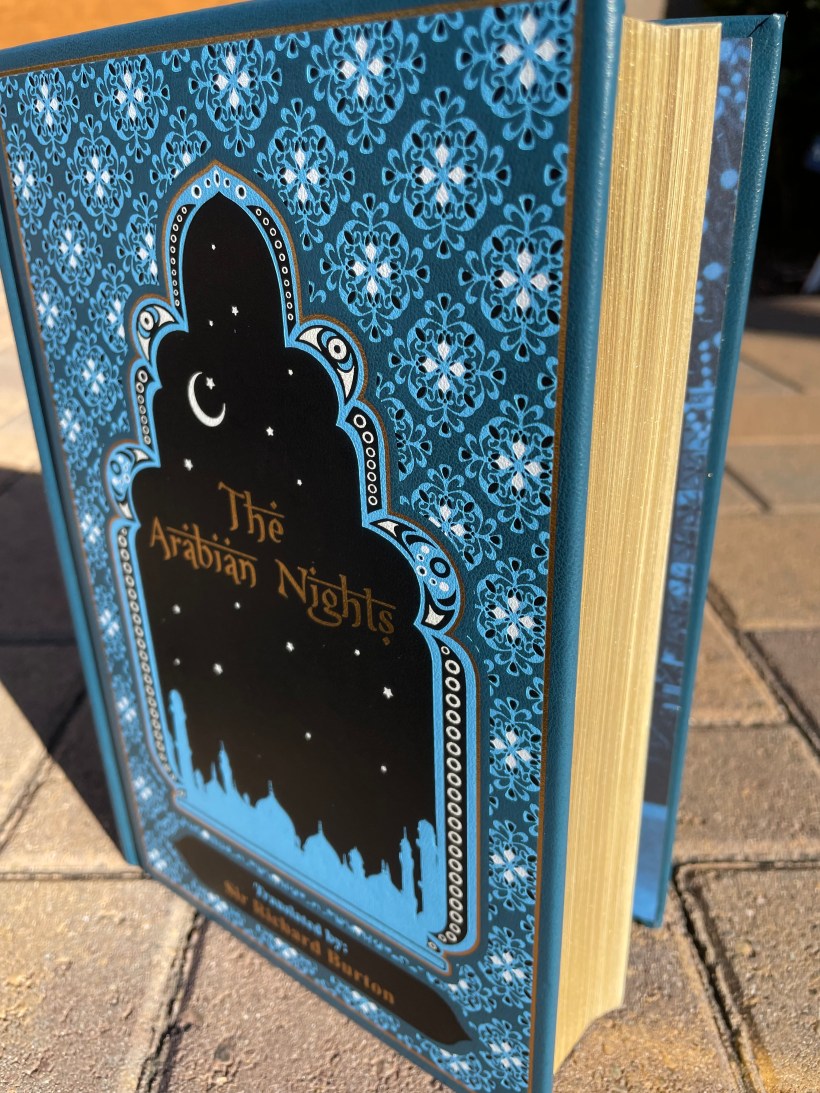
1001 Arabian Nights

Discussion Prompt by Tony Groesbeck

One should know before beginning that any attempt to read 1001 Arabian Nights (Or Arabian Nights, or Tales from a Thousand Nights and a Night, etc.) is bound to be a profound test of the reader’s patience, determination, and virtue in general.

To begin with, there is no authoritative collection of the tales to “conquer” as a reader. Because it is essentially a collection of stories dating at least as far back as the 8th century with some stories having been added as recently as the 1800’s, and being sourced from various cultures and languages, there is no firm set of the tales. Choosing an “official” version for Ink and Stone was our first challenge, and upon reflection, perhaps we should have taken it as an ill omen and moved on to other material. As it stands, we chose to read the Modern Classics Library edition officially entitled The Arabian Nights; Tales from a Thousand and One Nights, which is a translation by the English explorer, linguist, and writer, Sir Richard Francis Burton (and if you think this introduction is too long and/or repetitive, then Arabian Nights is not the book for you.)

Weighing in at well over 1000 pages including the author’s end notes (which are often more entertaining and readable than the tales themselves), this tome is a demanding read. I freely admit that despite my best efforts, I was not able (or willing) to read every story in this collection- so take this review with that grain of salt.

The story begins with an extensive invocation of sorts to ALLAH, which along with the understanding of the time period in which most of these tales were sourced serves notice to the reader that this is not a product of “Western Civilization,” but of the Middle East. It is important to remember this distinction as we will invariably discuss the differences in worldview that are prevalent throughout this collection. Namely, in the cultural views on religion, sexuality, ethnic relations, the value of human life, and general morality, a western reader will struggle to find common ground with many of these stories, but struggle we must, if we are to venture forth into the story of Shahrazad and her tales.

Interestingly, the story employs the rather sophisticated device commonly known as a “frame narrative.” You can find examples of frame narratives in ancient works from Homer (The Odyssey) and Ovid (Metamorphoses), all the way to the Victorian masterpiece, Frankenstein, by Mary Shelley, and even in more modern films such as The Princess Bride, and (my favorite example) The Usual Suspects.

In Arabian Nights, a bawdy and violent series of events leads to the young, intelligent, and beautiful Shahrazade being introduced to readers as a teller of tales, and she uses this talent to delay her vicious murder by the man who has just taken her virginity and plans to DECAPITATE her in the morning because, you know, he is a king, and she is a woman and probably deserves it (please pick up on my sarcasm here.)

This brilliant young woman takes the frame narrative to Inception-level by placing story within story within story ad nauseum. In doing so, she is able to keep the king unsatisfied (at least his mind) until after nearly three years, and after giving the king THREE SONS, she finally askes the king if he wouldn’t mind NOT cutting her head off. Luckily for Shahrazad, the king says his version of “Silly girl, I decided not to kill you before you had any of my sons. I figured out after just a few months that you are worth keeping around, because I’m a good guy like that.” So as a result, Shahrazad got the added bonus of being able to raise her three kids AND marry the psychopath who had killed almost 1100 girls after taking their virginity. (It’s cool though… he apologized and threw a party to say he was sorry.)

Throughout the reading of this collection, I often found myself asking “What is going on!?!?” Many of the stories and the cultural expectations that made the stories somehow feasible to some audience somewhere were so foreign to me that it made me wonder if my own perspective, limited in certain regards, made me miss something special about these stories.

Is it possible that Shahrazade’s stories somehow “educated” the king and brought about a change in him? If so, the girl was subtle and patient, and I look forward to discussing this possibility, along with whichever of the stories we completed as a group. I think it is safe to assume that no one here finished all of these stories, but if you did, I raise a glass and say, let’s have at it!